
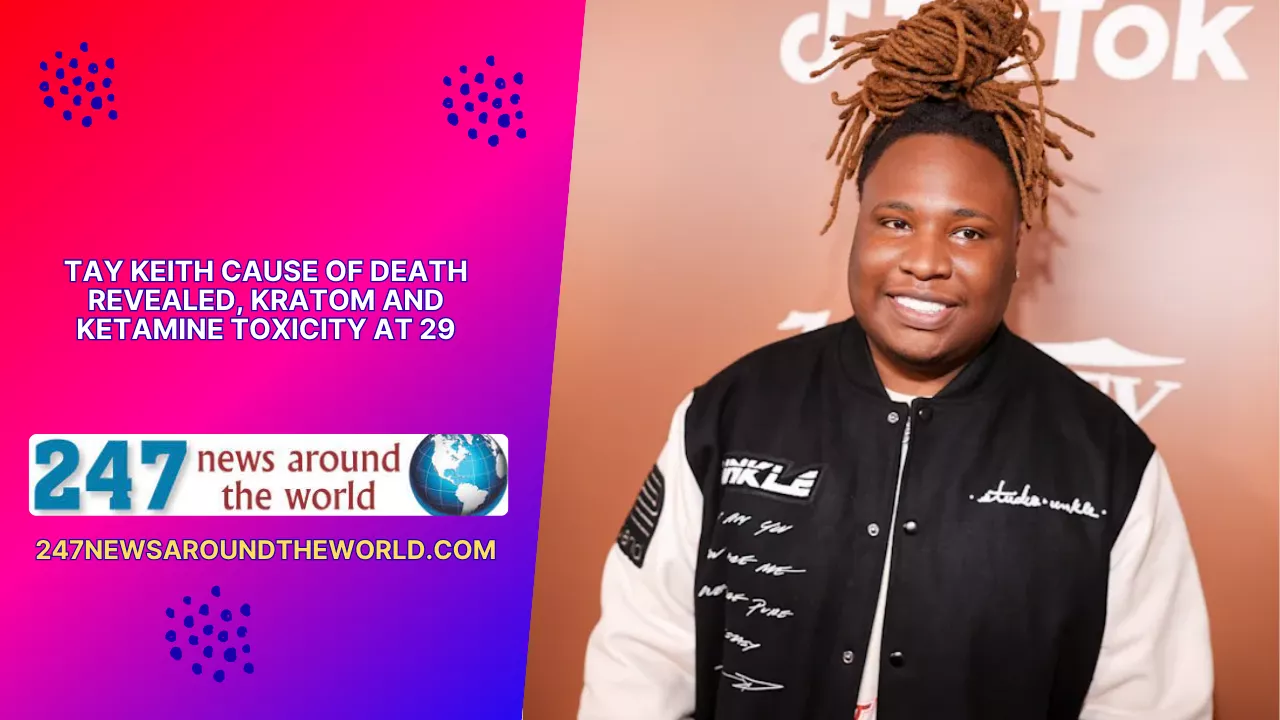

The Nashville Medical Examiner’s Office has officially confirmed that Grammy-nominated hip-hop producer Tay Keith died from an accidental drug overdose.
According to the autopsy report, obtained by TMZ and confirmed by Rolling Stone on September 17, 2026, Keith died from “combined mitragynine, 7-hydroxymitragynine, mitragynine pseudoindoxyl, and ketamine toxicity.” The manner of death was classified as an accident.
Mitragynine, 7-hydroxymitragynine, and mitragynine pseudoindoxyl are all compounds found in kratom, a plant-based substance derived from the leaves of the Mitragyna speciosa tree native to Southeast Asia. Kratom acts on the brain’s opioid receptors and is legally sold in the United States as a supplement, despite not being approved by the FDA for any medical use. Ketamine is a dissociative anesthetic with legitimate medical applications that is also widely misused recreationally.
Keith, whose real name was Brytavious LaKeith Chambers, was found dead in his Nashville, Tennessee, apartment on June 18, 2026, during a welfare check requested by his girlfriend. He was 29 years old. The Metropolitan Nashville Police Department said at the time that no foul play was suspected. The medical examiner’s report also noted that Keith had nicotine and ethanol (alcohol) in his system and that he had mild coronary artery disease. Drug paraphernalia was found at the scene.
The revelation comes nearly three months after Keith’s death and closes one chapter of uncertainty while opening questions about kratom, a substance that many people outside of specific communities have never heard of. This article covers the complete medical examiner findings, a thorough explanation of what kratom is and how it works, Tay Keith’s full career and legacy, and the tributes that followed his death.

The Complete Medical Examiner’s Report: Every Confirmed Detail
The Nashville Medical Examiner’s Office provided the most detailed account of Keith’s death. Here is everything the report confirmed.
🚨 EXCLUSIVE: Hip-hop producer Tay Keith’s cause of death revealed.
Details: https://t.co/leOSBnr1hh pic.twitter.com/BixjWT8lMR
— TMZ (@TMZ) September 17, 2026
Medical Examiner’s Findings
| Detail | Information |
|---|---|
| Full legal name | Brytavious LaKeith Chambers |
| Professional name | Tay Keith |
| Age at death | 29 |
| Date of death | June 18, 2026 |
| Location | Nashville, Tennessee (his apartment) |
| Discovered by | Metropolitan Nashville Police during a welfare check requested by his girlfriend |
| Cause of death | Combined mitragynine, 7-hydroxymitragynine, mitragynine pseudoindoxyl, and ketamine toxicity |
| Manner of death | Accident |
| Substances in system | Mitragynine (kratom compound), 7-hydroxymitragynine (kratom compound), mitragynine pseudoindoxyl (kratom compound), ketamine, nicotine, ethanol (alcohol) |
| Medical condition noted | Mild coronary artery disease |
| Scene findings | Drug paraphernalia found surrounding the body |
| Foul play | Not suspected |
| Report released | September 17, 2026 (approximately three months after death) |
| First reported by | TMZ; confirmed by Rolling Stone via Nashville Medical Examiner’s Office source |
The specificity of the toxicology results is notable. The medical examiner did not list a single substance but identified three distinct kratom alkaloids alongside ketamine. This suggests that the combination of kratom compounds with ketamine created a toxic interaction that proved fatal.
Investigators have not established how Keith obtained the kratom or whether he was intentionally using it. It is also unclear whether the ketamine was obtained through a prescription, a clinical setting, or illicit channels. TMZ reported that it was “unclear if he was using kratom at the time or if he somehow came into contact with the drug another way.”
What Is Kratom: The Substance Found in Tay Keith’s System
Kratom has received relatively little mainstream attention despite being widely available in the United States. Tay Keith’s death is bringing the substance into a public conversation that, for many, begins with a basic question: what is it?
The Plant
Kratom comes from the leaves of the Mitragyna speciosa tree, an evergreen that grows natively in Southeast Asia, primarily in Thailand, Malaysia, Indonesia, Myanmar, and Papua New Guinea. The leaves have been used for centuries in traditional medicine in those regions, typically chewed raw or brewed into a tea.
In the United States, kratom is most commonly sold as a dried, ground powder with a dusty green appearance. It is also available in capsules, tablets, extracts, and liquid formulations. It is sold in smoke shops, gas stations, online retailers, and some pharmacies.
How It Works
Kratom’s active compounds, primarily mitragynine and 7-hydroxymitragynine, interact with the brain’s opioid receptors. This is the same receptor system targeted by opioid painkillers like oxycodone and heroin, though kratom’s interaction with these receptors is chemically distinct.
At low doses, kratom produces stimulant-like effects: increased energy, alertness, and sociability. At higher doses, it produces sedative and pain-relieving effects similar to opioids, including euphoria and relaxation.
Uses and Claims
People use kratom for a range of purposes, including pain relief, mood enhancement, energy boosting, and as a tool for managing opioid withdrawal symptoms. The Mayo Clinic describes it as a supplement “sold by pharmacies as a mood lifter, energy booster, and pain reliever” and notes that it is “also a remedy for opium withdrawal.”
Legal Status
Kratom’s legal status in the United States is complicated. It is not classified as a controlled substance under federal law, meaning it is legal to buy, sell, and possess in most of the country. However, the FDA has not approved kratom for any medical use and has issued multiple warnings about its safety. Several states and municipalities have banned or restricted kratom, including Alabama, Arkansas, Indiana, Rhode Island, Vermont, and Wisconsin.
Risks and Dangers
The FDA, the DEA, and multiple medical organizations have raised concerns about kratom’s potential for addiction, dependence, and harmful interactions with other substances.
Kratom: Key Facts
| Detail | Information |
|---|---|
| Scientific name | Mitragyna speciosa |
| Plant type | Evergreen tree, native to Southeast Asia |
| Active compounds | Mitragynine, 7-hydroxymitragynine, mitragynine pseudoindoxyl |
| Mechanism | Acts on opioid receptors in the brain |
| Low-dose effects | Stimulant (energy, alertness, sociability) |
| High-dose effects | Sedative, pain-relieving, euphoria (opioid-like) |
| Common forms | Powder, capsules, tablets, extracts, liquids |
| Where sold | Smoke shops, gas stations, online retailers, some pharmacies |
| Federal legal status | Not a controlled substance (legal at federal level) |
| FDA approval | None; FDA has not approved kratom for any medical purpose |
| FDA warnings | Multiple warnings about safety risks, contamination, and potential for addiction |
| States where banned | Alabama, Arkansas, Indiana, Rhode Island, Vermont, Wisconsin, and others |
| Interaction risks | Dangerous when combined with other substances, particularly opioids, benzodiazepines, alcohol, and dissociatives like ketamine |
| Deaths linked | The FDA has attributed more than 40 deaths to kratom-containing products |
The critical factor in Keith’s death appears to be the combination of kratom compounds with ketamine. Individually, each substance carries risks. Together, their interaction can amplify sedative and respiratory-depressing effects, potentially leading to respiratory failure, loss of consciousness, and death.
What Is Ketamine and Why Was It in His System
Ketamine, the other primary substance identified in Keith’s toxicology, is a dissociative anesthetic that has both medical and recreational uses.
Ketamine: Key Facts
| Detail | Information |
|---|---|
| Classification | Dissociative anesthetic |
| Legal status | Schedule III controlled substance (legal with prescription) |
| Medical uses | Anesthesia, treatment-resistant depression (Spravato/esketamine), chronic pain management |
| Recreational effects | Dissociation, hallucinations, euphoria, altered perception of time and space |
| Risks | Respiratory depression, loss of consciousness, bladder damage (with chronic use), psychological dependence |
| Street names | K, Special K, Kit Kat, Vitamin K |
| Interaction with kratom | Both substances can depress respiratory function; combined use significantly increases risk of fatal respiratory failure |
In recent years, ketamine has gained mainstream attention through its use in clinical settings for treating depression and PTSD. Ketamine infusion clinics have proliferated across the United States. However, ketamine is also widely available through illicit channels and is commonly used recreationally.
The medical examiner’s report does not specify how Keith obtained the ketamine or whether it was used in a clinical or recreational context.
Also Read: Meet BC Jean Ballas: Mark Ballas Wife Who Wrote Beyonce’s Hit Song
Tay Keith’s Career: From Memphis Teenager to Grammy-Nominated Hitmaker
The medical examiner’s findings have closed the question of how Tay Keith died. But the reaction to his death, both in June and again this week, reflects the magnitude of what he built in a career that lasted barely a decade.
View this post on Instagram
Early Life
Brytavious LaKeith Chambers grew up in the Raleigh neighborhood of Memphis, Tennessee. He began producing beats as a teenager, drawing on the legacy of Memphis hip-hop, including the sounds of Three 6 Mafia and 8Ball and MJG.
Tay enrolled at Middle Tennessee State University in Murfreesboro, where he continued producing music while pursuing his degree. He graduated in 2018, the same year his career broke through.
The Breakthrough
In 2018, at age 21, Keith produced BlocBoy JB’s “Look Alive” featuring Drake. The song debuted at No. 5 on the Billboard Hot 100 and established Keith as one of hip-hop’s most exciting new producers. His signature producer tag, an assertive declaration of his name at the start of tracks, became one of the most recognizable sonic signatures in modern rap.
Within the same year, he co-produced Travis Scott’s “Sicko Mode,” which reached No. 1 on the Billboard Hot 100 and became one of the biggest hip-hop songs of the decade. The track earned Keith his first Grammy nomination for Best Rap/Sung Performance at the 2019 ceremony.
Major Productions and Career Milestones
Tay Keith: Career Highlights
| Year | Achievement |
|---|---|
| 2018 | Produced “Look Alive” (BlocBoy JB feat. Drake); debuted No. 5 on Billboard Hot 100 |
| 2018 | Co-produced “Sicko Mode” (Travis Scott feat. Drake); No. 1 on Billboard Hot 100 |
| 2018 | Co-produced “Not Alike” (Eminem feat. Royce da 5’9″); featured on Kamikaze album |
| 2018 | Graduated from Middle Tennessee State University |
| 2019 | Grammy nomination: Best Rap/Sung Performance for “Sicko Mode” |
| 2019 | Co-produced “Before I Let Go” (Beyonce); bonus track on Homecoming: The Live Album |
| 2020-2023 | Continued producing hits across multiple artists |
| 2024 | Executive produced Sexyy Red’s In Sexyy We Trust album, including “Pound Town” and “SkeeYee” |
| 2025 | Named to Forbes 30 Under 30 list |
| Total | 11 Billboard Hot 100 top-10 hits |
Notable Collaborators
| Artist | Production |
|---|---|
| Drake | “Look Alive,” “Nonstop” |
| Travis Scott | “Sicko Mode” |
| Eminem | “Not Alike” |
| Beyonce | “Before I Let Go” |
| Future | Multiple productions |
| Sexyy Red | “Pound Town,” “SkeeYee,” In Sexyy We Trust (executive producer) |
| BlocBoy JB | “Look Alive” |
By 29, Keith had assembled a production catalog that connected him with some of the biggest names in contemporary music. He represented a generation of producers who became brands in their own right, building audiences and careers alongside the artists they worked with.
How Tay Keith Was Found and What Happened in June 2026
The circumstances of Keith’s discovery were straightforward but painful.
June 18, 2026: What Happened
| Sequence | Event |
|---|---|
| 1 | Keith’s girlfriend was unable to reach him by phone |
| 2 | She contacted police and requested a welfare check at his Nashville apartment |
| 3 | Officers from the Metropolitan Nashville Police Department responded |
| 4 | Keith was found dead inside the apartment |
| 5 | Drug paraphernalia was found at the scene |
| 6 | No foul play was suspected |
| 7 | The case was referred to the Nashville Medical Examiner’s Office for classification |
The Metro Nashville Police Department released a statement at the time: “No foul play is suspected in the death of Brytavious Chambers, 29, also known as Grammy nominated record producer Tay Keith.”
The three-month delay between Keith’s death and the release of the medical examiner’s findings is consistent with the standard timeline for toxicology testing, which typically takes 6 to 12 weeks to complete.
The Tributes That Followed Tay Keith’s Death
The hip-hop community’s response to Keith’s death in June was immediate and widespread.
Days after he passed, family, friends, and fans gathered near his childhood home in the Raleigh neighborhood of Memphis for a candlelight vigil. Balloons were released into the sky as mourners shouted “Long live Tay Keith.”
Artists, collaborators, and industry figures shared tributes on social media. The response reflected both the reach of Keith’s production catalog and the personal relationships he had built across the industry.
The September 17 release of the medical examiner’s report has prompted a second wave of tributes and reflection, with many in the music community now grappling with the specific details of how Keith died.
The Growing Conversation About Kratom Safety After Celebrity Deaths
Tay Keith’s death adds his name to a growing list of cases in which kratom has been identified as a contributing factor in a drug-related fatality. The substance occupies a unique regulatory gray area: it is federally legal, widely accessible, marketed as a natural supplement, and yet carries risks that the FDA has repeatedly flagged.
The FDA has attributed more than 40 deaths to kratom-containing products. The DEA considered classifying kratom as a Schedule I controlled substance in 2016 but withdrew the proposal after significant public backlash from kratom advocates who argued the substance helped them manage chronic pain and opioid withdrawal.
The fact that kratom interacts with the same opioid receptor system as drugs like heroin and fentanyl, while being legally sold alongside energy drinks and dietary supplements, creates a risk environment that many consumers do not fully understand.
In Keith’s case, the combination of three distinct kratom alkaloids with ketamine created the toxic interaction that killed him. Whether he understood the risks of that specific combination, or whether the kratom was consumed in a form that made its contents unclear, remains unknown.
Frequently Asked Questions (FAQ)
What was Tay Keith’s cause of death?
The Nashville Medical Examiner’s Office confirmed that Tay Keith died from “combined mitragynine, 7-hydroxymitragynine, mitragynine pseudoindoxyl, and ketamine toxicity.” The first three compounds are found in kratom. The manner of death was classified as an accident.
What is kratom?
Kratom is a plant-based substance made from the leaves of the Mitragyna speciosa tree, native to Southeast Asia. Its active compounds, primarily mitragynine and 7-hydroxymitragynine, interact with the brain’s opioid receptors. At low doses it acts as a stimulant; at higher doses it produces sedative, pain-relieving effects similar to opioids. It is federally legal in the United States but not approved by the FDA for any medical use.
Is kratom legal?
Kratom is legal at the federal level in the United States. However, several states have banned it, including Alabama, Arkansas, Indiana, Rhode Island, Vermont, and Wisconsin. Additional cities and counties have enacted local bans.
What was found at the scene?
The medical examiner’s report noted that drug paraphernalia was found surrounding Keith’s body. His system contained mitragynine (kratom), 7-hydroxymitragynine (kratom), mitragynine pseudoindoxyl (kratom), ketamine, nicotine, and ethanol. He also had mild coronary artery disease.
How old was Tay Keith when he died?
Tay Keith was 29 years old. He was born Brytavious LaKeith Chambers in Memphis, Tennessee.
What was Tay Keith known for?
Tay Keith was a Grammy-nominated hip-hop producer who broke through in 2018 with BlocBoy JB’s “Look Alive” featuring Drake. He co-produced Travis Scott’s “Sicko Mode” (No. 1 on the Billboard Hot 100), Eminem’s “Not Alike,” and Beyonce’s “Before I Let Go.” He had 11 Billboard Hot 100 top-10 hits and was named to Forbes’ 30 Under 30 in 2025.
When was Tay Keith found dead?
Keith was found dead in his Nashville apartment on June 18, 2026, during a welfare check requested by his girlfriend. The medical examiner’s report was released approximately three months later on September 17, 2026.
Is kratom dangerous?
The FDA has issued multiple warnings about kratom’s safety and has attributed more than 40 deaths to kratom-containing products. Kratom carries risks of addiction, dependence, and dangerous interactions with other substances. When combined with depressants like ketamine, alcohol, or opioids, the risk of fatal respiratory failure increases significantly.
Also Read: Duncan Sheik Hospitalized at 56, Meet Partner and Former Model Nora Ariffin
Last Updated on September 18, 2026 by 247 News Around The World