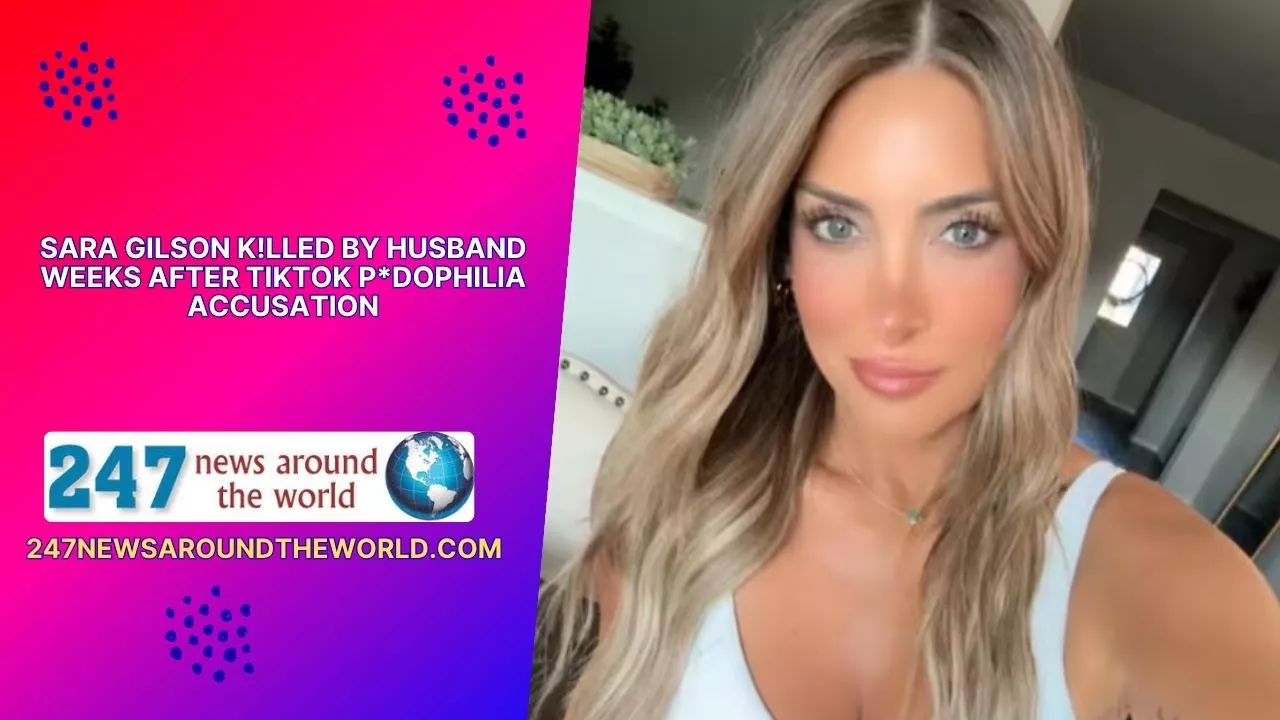

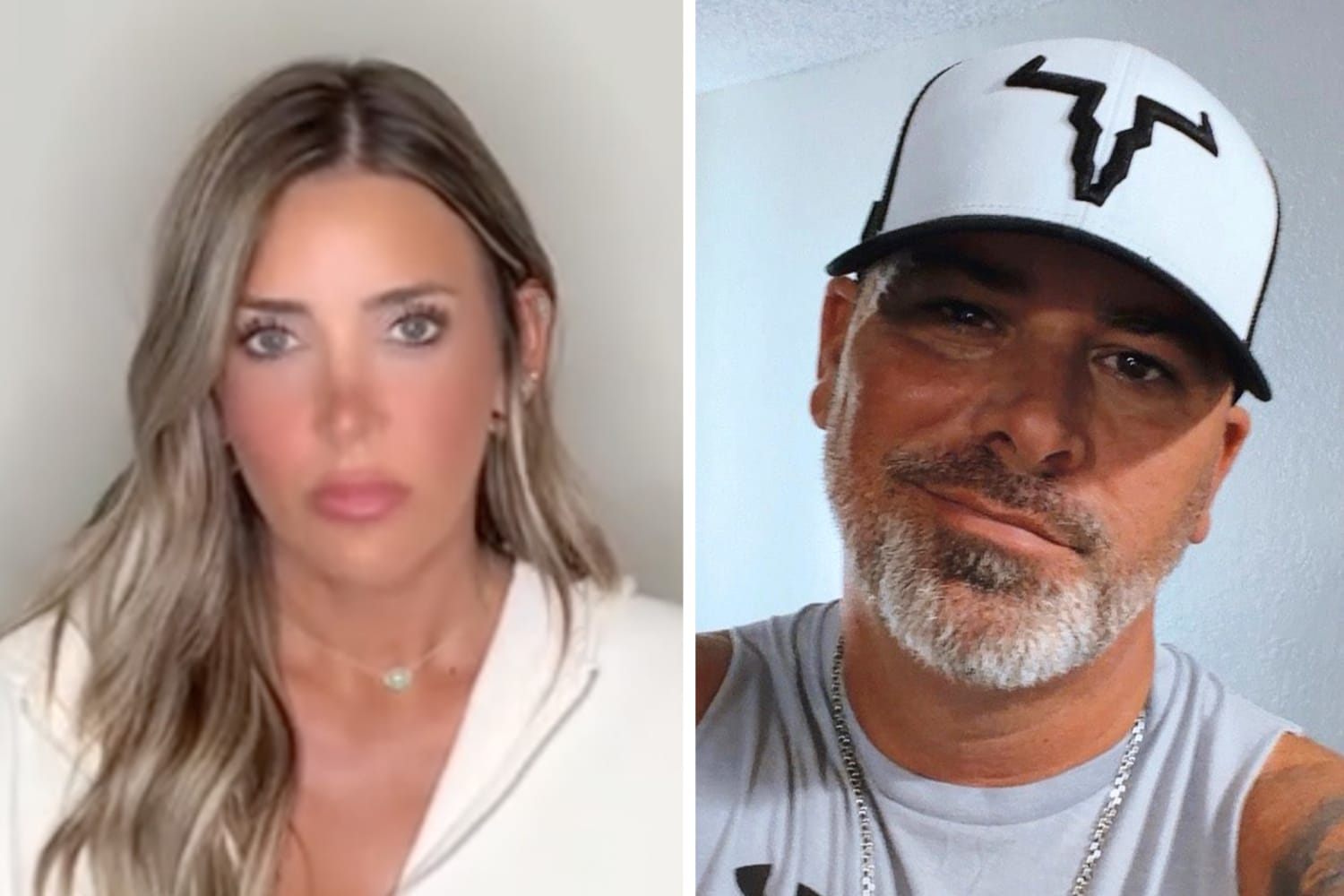
Sara Gilson, a 43-year-old Oklahoma content creator and TikToker known to her TikTok followers as @mrsgilson, was fatally shot inside her home in the Tulsa suburb of Owasso on the night of Thursday, July 23, 2026. According to the Owasso Police Department, the person who killed her was her estranged husband, Jeremiah “Shawn” Duffey, who then took his own life.
Police say officers were dispatched to a domestic-violence call at about 11:16 p.m. A 911 dispatcher reportedly heard a woman screaming, followed by what sounded like a gunshot. Attempts to call the number back went unanswered. Moments later, a boy phoned 911 from a neighbor’s house and told dispatchers that his stepfather had shot his mother. When officers reached the home, they found Gilson and Duffey both dead of gunshot wounds.
Investigators have said the deaths appear to be a murder-suicide, though the department has emphasized that the case remains under investigation. Police also said there was no ongoing threat to the public.
What has drawn national attention is the timeline. Just twelve days before she was killed, Gilson had used one of TikTok’s most recognizable formats to publicly accuse Duffey of being a pedophile.
The TikTok Video That Went Viral
On July 11, 2026, Gilson posted a short video to her account, where she had more than 30,000 followers. The clip used a widely shared TikTok trend in which creators film themselves as though they are sitting for a Netflix-style documentary interview, recounting a difficult or shocking chapter of their lives.
The caption read: “Preparing for when Netflix drops a documentary about my soon to be ex husband who I just found out is a pedophile.” She added, “I wish I was joking,” along with hashtags referencing the documentary trend.
The post resonated because the format usually delivers something ironic or lighthearted, and Gilson used it to surface a genuinely serious allegation. The video was still live on her account after her death, which is part of why the story spread so quickly across social platforms and mainstream news outlets.
Duffey, who used the handle “Shawn Duffey” and also went by “Duff Daddy” online, made his own account private. He was never charged in connection with the allegations before his death, and the accusations against him were never tested in court.
On July 11, TikTok creator and hairstylist Sara Gilson posted a viral “Netflix documentary” trend video.
Sitting silently in a chair, the on-screen text read: “Preparing for when Netflix drops a documentary about my soon to be ex husband who I just found out is a PDF.”
She had… pic.twitter.com/2Vfgiw0TXf
— FlojoeTV (@FlojoeTV) July 25, 2026
Timeline of Events
Here is the sequence of events as reported by the Owasso Police Department and multiple news organizations, presented in order.
| Date | Event |
|---|---|
| June 9, 2026 | A girl and her parent tell police that Duffey, who coached the girl’s traveling basketball team, inappropriately touched her at an elementary-school event. Another coach reportedly witnessed the incident, intervened, and reported it. |
| June 10, 2026 | Gilson is granted an emergency protective order. Duffey is ordered to stay at least 100 yards away from her and her home. |
| July 11, 2026 | Gilson posts the viral TikTok video accusing Duffey of pedophilia, using the “Netflix documentary” trend. |
| July 23, 2026 (11:16 p.m.) | Police respond to a domestic-violence call. A dispatcher reportedly hears screaming and a gunshot. Gilson’s son calls 911 from a neighbor’s home. |
| July 23–24, 2026 | Officers find Gilson and Duffey dead of gunshot wounds. Police describe the deaths as an apparent murder-suicide and say there is no threat to the public. |
Police also stated that similar conduct by Duffey toward the same juvenile had reportedly been reported before, across multiple law-enforcement jurisdictions and multiple states. After the June report, authorities said, Duffey fled and had not been located by police.
How Protective Orders Work, and Where Their Limits Lie
One of the most common questions readers ask after a case like this is direct: she had a protective order, so how did this happen? Understanding the answer requires understanding what a protective order actually does, and what it cannot do.
A protective order (sometimes called a restraining order or an order of protection) is a civil court order that directs one person to stay away from another and to stop specific behaviors. In Oklahoma, as in most states, a judge can grant an emergency or ex parte order quickly, often the same day, based on a sworn statement describing an immediate danger. That temporary order typically stays in place until a full hearing, where a longer-term order can be issued.
The order Gilson received on June 10 required Duffey to remain 100 yards away from her and her home. On paper, that boundary is enforceable and violating it is a crime. In practice, a protective order is a legal instrument, not a physical barrier. It depends on the other person choosing to comply, and on law enforcement being able to respond in time if they do not.
This is the uncomfortable reality that domestic-violence advocates stress repeatedly: an order can create legal consequences and a paper trail, and it is often a critical safety step, but it cannot physically stop someone who is determined to cause harm. That gap is precisely why safety planning, and the removal of firearms from an abuser’s reach, matter alongside the order itself.
Why This Case Matters: What Research Says About the Most Dangerous Moment
The Sara Gilson case fits a pattern that researchers who study intimate-partner violence have documented for decades, and understanding that pattern is the most useful thing a reader can take away.
The period when a victim leaves, files for separation, or seeks a protective order is statistically the most dangerous. Analyses summarized in the Journal of the American Academy of Psychiatry and the Law note that intimate-partner homicide is consistently associated with a victim physically leaving or beginning legal separation, and that when women are killed by a partner, the killing most often occurs within the first year after separation. The same body of work notes that women who obtain restraining orders can be at heightened risk, precisely because seeking an order usually follows an escalation in threats or violence.
Access to a firearm changes the math dramatically. Research widely cited from Johns Hopkins nursing professor Jacquelyn Campbell, who has studied domestic-violence homicide for decades, finds that a woman is roughly five times more likely to be killed when her abuser has access to a gun. Data compiled by gun-violence-prevention groups including Giffords and Brady indicate that firearms are involved in more than half of intimate-partner homicides in the United States, and that women make up the large majority of victims in gun-related intimate-partner killings.
There is one more documented risk factor that appears relevant to how this case unfolded: an abuser expressing suicidal thoughts. Researchers have long flagged that a partner who becomes suicidal, combined with access to a firearm, can signal a period of extreme danger. A murder-suicide is, tragically, the intersection of those factors.
None of this is offered to assign blame to anyone but the person who pulled the trigger. It is offered because these patterns are knowable, and knowing them is part of how future tragedies are prevented.
Warning Signs Advocates Say to Take Seriously
Domestic-violence organizations point to a recognizable set of escalation signals. Readers who see several of these in their own lives, or in the life of someone they care about, are encouraged to reach out to the resources listed below.
- Escalation around separation: threats, stalking, or increased control when a relationship is ending.
- Access to firearms combined with anger, jealousy, or possessiveness.
- Violations of a protective order, including “checking in,” showing up, or using children to make contact.
- Threats of self-harm used to control a partner, or genuine suicidal ideation paired with access to weapons.
- Prior reports or a history of abusive or predatory behavior, sometimes across different places or relationships.
Social Media Reaction
The story spread across TikTok, X, and Facebook within hours, in large part because Gilson’s own video was still online. Many viewers described the sequence of events as chilling: a woman using a lighthearted internet format to raise a deadly serious alarm, and then being killed within two weeks. Others focused on her two children, and on a fundraiser organized by family to support them.
As with many viral tragedies, the online response also carried a cautionary note. Commenters and advocates urged people not to circulate graphic details or speculation, and to redirect attention toward the surviving children and toward domestic-violence awareness. That is a reasonable standard for any outlet or reader engaging with this story.
Frequently Asked Questions
Who was Sara Gilson?
Sara Gilson was a 43-year-old Oklahoma content creator, hairstylist, and mother of two who posted lifestyle, family, and personal content on TikTok under the handle @mrsgilson, where she had more than 30,000 followers.
How did Sara Gilson die?
According to the Owasso Police Department, Gilson was fatally shot in her home on July 23, 2026, by her estranged husband, Jeremiah “Shawn” Duffey, who then died of a self-inflicted gunshot wound. Police have described it as an apparent murder-suicide and say the investigation is ongoing.
What did Sara Gilson’s TikTok video say?
On July 11, 2026, she posted a video using the “Netflix documentary” trend with a caption stating she was preparing for a documentary about her soon-to-be ex-husband, whom she said she had learned was a pedophile. She added, “I wish I was joking.”
Was Jeremiah Duffey ever charged?
Reporting indicates Duffey was accused in June 2026 of inappropriately touching a minor he coached, which led Gilson to obtain a protective order. He was not charged before his death, and the allegations were never adjudicated in court.
Did Sara Gilson have a protective order?
Yes. She was granted an emergency protective order on June 10, 2026, requiring Duffey to stay at least 100 yards from her and her home.
What happened to her children?
Gilson leaves behind a son and a daughter. Her son was taken into protective custody and later released to a parent not involved in the incident. Family members organized an online fundraiser to support the children.
Where did this happen?
In the Owasso and Collinsville area, suburbs of Tulsa, Oklahoma.
Also Read | Savannah Guthrie Begs Kidnappers in Emotional Plea for Missing Mother Nancy
Last Updated on July 28, 2026 by 247 News Around The World