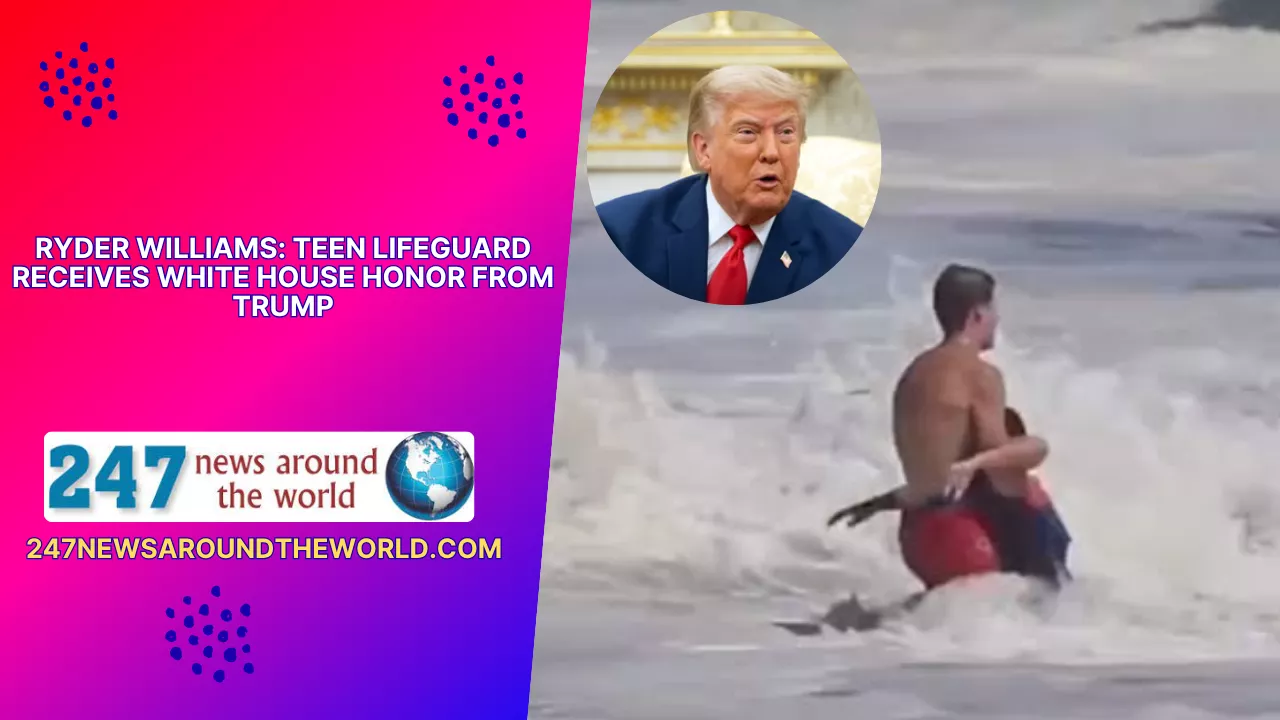

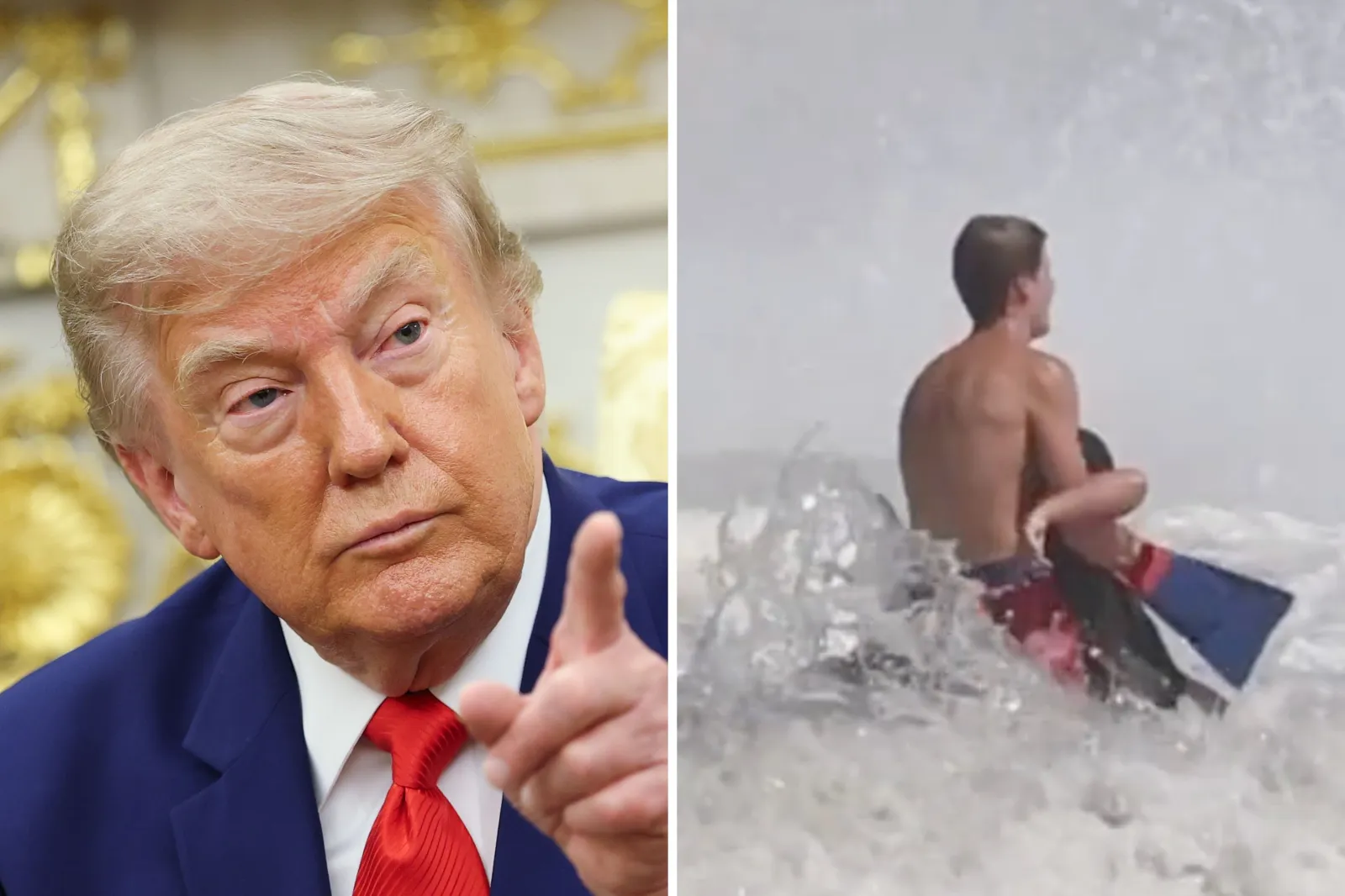
A two minute stretch of pounding surf at a Santa Cruz beach has turned a first season teenage lifeguard into one of the most talked about young Americans of the summer. Ryder Williams, 16, held onto a drowning 10 year old boy through wave after wave at Seabright State Beach, refused to let go, and brought the child back to shore.
Days later, President Donald Trump said he wants to bring Williams and his family to the White House and award what he called a “High Civilian Honor.”
This article lays out what is confirmed, what is still open, and why the story struck such a nerve. It also answers the practical questions readers keep searching for: what actually happened in the water, what a Junior Guards program is, what a presidential civilian honor involves, and how the teenager’s own family responded. Everything below is drawn from official statements by California State Parks, on the record comments from the Williams family, and reporting by national outlets.
What Happened at Seabright State Beach
The rescue took place on Saturday, July 25, 2026, at Seabright State Beach in Santa Cruz, California, near Mott Avenue and East Cliff Drive. According to California State Parks, at about 3:32 p.m. a lifeguard was on a safety contact when a child lost his balance and was knocked down by a wave. The boy, believed to be around 10 years old, was swept roughly 15 yards offshore into a large, breaking shorebreak that witnesses estimated at 8 to 10 feet.
Footage from Seabright State Beach in Santa Cruz captures a dramatic ocean rescue as a teenage lifeguard pulls a 10-year-old boy from powerful surf. pic.twitter.com/Y4d52mGjST
— NoComment (@nocomment) July 29, 2026
Williams reached the boy and held on. A bystander’s video, filmed by Scott Vander Dussen and posted to the Instagram account Santa Cruz Now, shows the lifeguard repeatedly disappearing beneath the whitewater while keeping his grip on the child. A second lifeguard entered the water to help bring the boy to the beach. State Parks said the child was pulled out with no serious injuries, evaluated by paramedics, and released to his parents.
Reporting put the length of the rescue at just over two minutes. Vander Dussen told reporters the ocean conditions “changed in a heartbeat” and caught beachgoers off guard. Several people, including a second lifeguard, tried to reach the pair, and social media accounts described bystanders forming a human chain that the surf eventually broke apart.
Fact: The Rescue at a Glance
- Who: Ryder Williams, 16, first season California State Parks seasonal lifeguard
- When: Saturday, July 25, 2026, around 3:32 p.m.
- Where: Seabright State Beach, Santa Cruz, California
- What: Rescued a 10 year old boy swept about 15 yards offshore in 8 to 10 foot surf
- Duration: Just over two minutes, with a second lifeguard assisting
- Outcome: Boy recovered with no serious injuries and released to his parents
More Than One Rescue That Day
The viral clip captured a single dramatic save, but the Williams family later told reporters it was not the only one. According to the family, Williams took part in five rescues during his shift that Saturday. He returned to duty afterward and was back at his lifeguard station the following Tuesday, even as national attention built around him.
The scale of the weekend helps explain the pressure lifeguards were under. California State Parks’ Santa Cruz District performed 34 rescues across the weekend as a large swell battered the coastline. In other words, the moment that went viral was one intense episode inside a genuinely dangerous stretch of days along the Central Coast.
Background: Who Is Ryder Williams
Williams is a high school student and a first season seasonal lifeguard with California State Parks. He is 16, which is the minimum age California allows for the role. Before he was old enough to be hired, he trained through the Santa Cruz County Parks Department Junior Guards program, a youth pipeline that teaches ocean safety, swimming, and rescue skills to young people well before they can work as paid guards.
His family has made a point of shielding him from the spotlight. His father, Shane Williams, told reporters that his son “just wants to be a kid and work hard this summer and serve and protect his community,” adding, “I’m really proud of him. He’s an amazing kid.” His mother thanked the public online and declined suggestions of a personal fundraiser, writing that people were sending an overwhelming amount of “love, kindness, gratitude and respect” and noting that her son “was just doing the job that he absolutely loves.”
Rather than accept donations for the family, she pointed supporters toward the Junior Guards program that trained him, and argued that lifeguards should be recognized as first responders given the conditions they face along the Santa Cruz coast.
The White House Honor: What Trump Said
The political spotlight arrived quickly. Eric Trump reposted the rescue video first, writing that the teenager deserved “the highest civilian honor” and calling the moment “truly the best of America.”
We’re going to bring this heroic young man, and his family, into the White House with, perhaps, the boy he saved, to give him a High Civilian Honor. Very brave, he deserves it! President DONALD J. TRUMP https://t.co/dGL15o1tIv
— Donald J. Trump (@realDonaldTrump) July 28, 2026
President Trump followed with his own post, saying he would bring Williams and his family to the White House, “perhaps” alongside the boy he saved, to receive a “High Civilian Honor,” and adding, “Very brave, he deserves it!” Former New York City Mayor Rudy Giuliani also praised the rescue publicly.
It is worth being precise about the status of this honor, because headlines have moved faster than the paperwork.
Also Read | Sara Gilson K!lled by Husband Weeks After TikTok P*dophilia Accusation
What We Know vs. What Is Still Open
- Confirmed: The president publicly announced his intention to honor Williams and invite the family to the White House.
- Not yet confirmed: A date, a formal ceremony, and which specific award would be given.
- Not yet confirmed: Whether the family will accept or attend. As of publication, Williams had not commented publicly, and the family had signaled it is trying to keep him out of the spotlight.
What a “High Civilian Honor” Actually Means
Trump used the phrase “High Civilian Honor” without naming a specific medal, so it is useful to understand the options a president actually has. The two best known presidential civilian awards are:
- The Presidential Medal of Freedom, the highest civilian award in the United States, given for especially meritorious contributions to national interests, world peace, culture, or other significant endeavors.
- The Presidential Citizens Medal, created to recognize Americans who have performed exemplary deeds of service for the country or their fellow citizens.
A president can also recognize an individual through a White House visit, a public commendation, or a letter, none of which require the formal process of a named medal. Because the announcement came by social media rather than through an official award citation, it is not yet clear which of these routes, if any, will be used. Readers should treat the specific award as undecided until the White House confirms details.
Timeline of Events
- Saturday, July 25, 2026: Around 3:32 p.m., Williams rescues a 10 year old boy swept into heavy surf at Seabright State Beach. He reportedly takes part in five rescues that shift.
- Weekend of July 25 to 26: California State Parks’ Santa Cruz District logs 34 rescues as a large swell hits the coast.
- Monday, July 27, 2026: Eric Trump reposts the viral rescue video and calls for the teenager to receive the highest civilian honor.
- Tuesday, July 28, 2026: President Trump announces plans to invite Williams and his family to the White House for a “High Civilian Honor.” Williams returns to duty at his station the same period.
- Ongoing: The family declines a personal fundraiser and redirects support to the Junior Guards program. No ceremony date has been set.
Why It Matters
Stories like this travel far because they combine something rare with something familiar. The rare part is the footage: a teenager holding a child through breaking surf that overwhelmed grown adults nearby. The familiar part is the setting. Millions of families visit beaches every summer, and the video puts a face to a risk that is easy to underestimate.
The rescue also arrives during a season of heavy surf and elevated ocean rescues along the California coast, which gives the moment a public safety dimension beyond a single act of bravery. When a district records dozens of rescues in a weekend, the competence of young, well trained lifeguards stops being an abstraction.
There is a policy thread too. The point Williams’ mother raised, that lifeguards should be recognized as first responders, is a live debate in many coastal communities, where seasonal guards perform high stakes rescues without the same status or protections as police, fire, or paramedic personnel.
Industry and Community Reaction
Veteran lifeguards praised the technique on display, in particular the decision to lock onto the victim and ride out the sets rather than fight the ocean. A Santa Cruz lifeguard supervisor, Bryan Kine, offered a note of caution about the bystanders who tried to help, telling ABC7 that rescuers appreciate the eagerness but that untrained helpers often get swept off their feet, and expressing relief that no one else was hurt.
That tension, between the instinct to jump in and the reality that untrained rescuers frequently become victims themselves, is one of the most important takeaways for the public. The safest way to help someone caught in the surf is usually to call for a lifeguard, throw or extend a flotation device, and avoid entering dangerous water without training.
Social Media Reaction
Online, the response was overwhelmingly positive, with the video drawing thousands of reactions and widespread praise for a rookie guard performing under extreme conditions. Much of the commentary focused less on politics and more on the calm competence of a teenager doing a demanding job. The family’s decision to decline personal donations and steer support toward youth ocean safety training was widely shared as a model of how to respond to sudden fame.
Career and Personal Impact
For Williams, the immediate impact is national recognition at 16, which is a lot for anyone to carry. His family’s response suggests they want the attention to change as little as possible about his summer. The most concrete legacy may not be a medal at all, but a surge of public interest in Junior Guards programs and in ocean safety education, driven by the family’s request that supporters give there rather than to them.
On the financial side, there is no personal windfall to report, and by the family’s own choice. They turned down GoFundMe style fundraising and redirected that goodwill toward training programs for the next generation of guards. That decision has become part of why the story resonated.
Historical Context: Presidents and Everyday Heroes
Recognizing ordinary citizens for extraordinary acts is a long standing part of the American presidency. Everyday people, from those who intervene in emergencies to volunteers and community servants, have historically been honored through civilian medals or White House visits. What makes this case notable is the speed and the platform. The recognition emerged from a viral video and a social media announcement within days, rather than through a nomination process that can take months. That reflects how modern attention moves, and it is part of why the specifics of any formal honor are still being worked out.
What Comes Next
Several questions remain genuinely open, and honest reporting means saying so rather than guessing:
- Will the White House schedule a formal ceremony, and when?
- Which recognition, if any, will be conferred?
- Will the family accept, given their stated wish to keep Williams out of the spotlight?
- Will the boy who was rescued and his family take part?
The most likely near term outcome is continued attention to Santa Cruz lifeguards and to ocean safety, regardless of how the White House piece unfolds. This article will make sense to update once the White House confirms concrete details.
Frequently Asked Questions
Who is Ryder Williams?
Ryder Williams is a 16 year old high school student and first season seasonal lifeguard with California State Parks in Santa Cruz. He trained through the Santa Cruz County Parks Department Junior Guards program before he was old enough to work as a paid guard.
What did Ryder Williams do?
On July 25, 2026, he rescued a 10 year old boy who was swept about 15 yards offshore in heavy surf at Seabright State Beach. He held onto the boy through breaking waves for just over two minutes, with a second lifeguard helping bring the child to shore. The boy was not seriously injured.
Did Ryder Williams receive a White House honor?
Not yet in a formal sense. President Trump announced on July 28, 2026, that he intends to invite Williams and his family to the White House and award a “High Civilian Honor.” As of publication, no ceremony had been scheduled and no specific medal had been confirmed.
What is a “High Civilian Honor”?
The president used the phrase without naming a specific award. The best known presidential civilian honors are the Presidential Medal of Freedom, the highest civilian award, and the Presidential Citizens Medal, which recognizes exemplary service. It has not been confirmed which, if any, applies here.
How did Ryder Williams’ family respond?
His parents praised him while trying to shield him from attention. His mother declined suggestions of a personal fundraiser and asked supporters to donate to the Junior Guards program instead. Ryder father said his son simply wants to work hard and serve his community.
What is a Junior Guards program?
Junior Guards programs are youth training programs run by many coastal agencies that teach swimming, ocean safety, and rescue skills to young people, often years before they can be hired as paid lifeguards.
How can beachgoers stay safe in heavy surf?
Swim near a staffed lifeguard tower, obey posted warnings, and never enter dangerous surf to attempt a rescue without training. If someone is in trouble, call for a lifeguard and throw or extend a flotation device rather than going in yourself.
Also Read | Ariana Grande Sues Hackers Over Leaked Unreleased Music and Private Files
Last Updated on July 29, 2026 by 247 News Around The World