
When a self-made billionaire lays out the exact terms under which his children will, or will not, inherit his fortune, people pay attention. That is precisely what happened when John Morgan, the founder of the personal injury law firm Morgan & Morgan, described the strict family rule he attaches to marriage and money.
The headline version spread quickly across social media: sign a prenuptial agreement, or your inheritance is capped. But the soundbite leaves out the reasoning, the legal logic, and the personal history that shaped the policy. Morgan is not a random wealthy figure making an offhand remark. He is a trial lawyer with an estimated net worth of $1.5 billion who has spent decades watching how money, marriage, and litigation collide.
This article breaks down exactly what Morgan said, why he structured the rule the way he did, how it fits into broader wealth-protection strategy, and what ordinary families can actually take from it. The goal is a complete, standalone resource so you do not need to piece the story together from a dozen scattered posts.
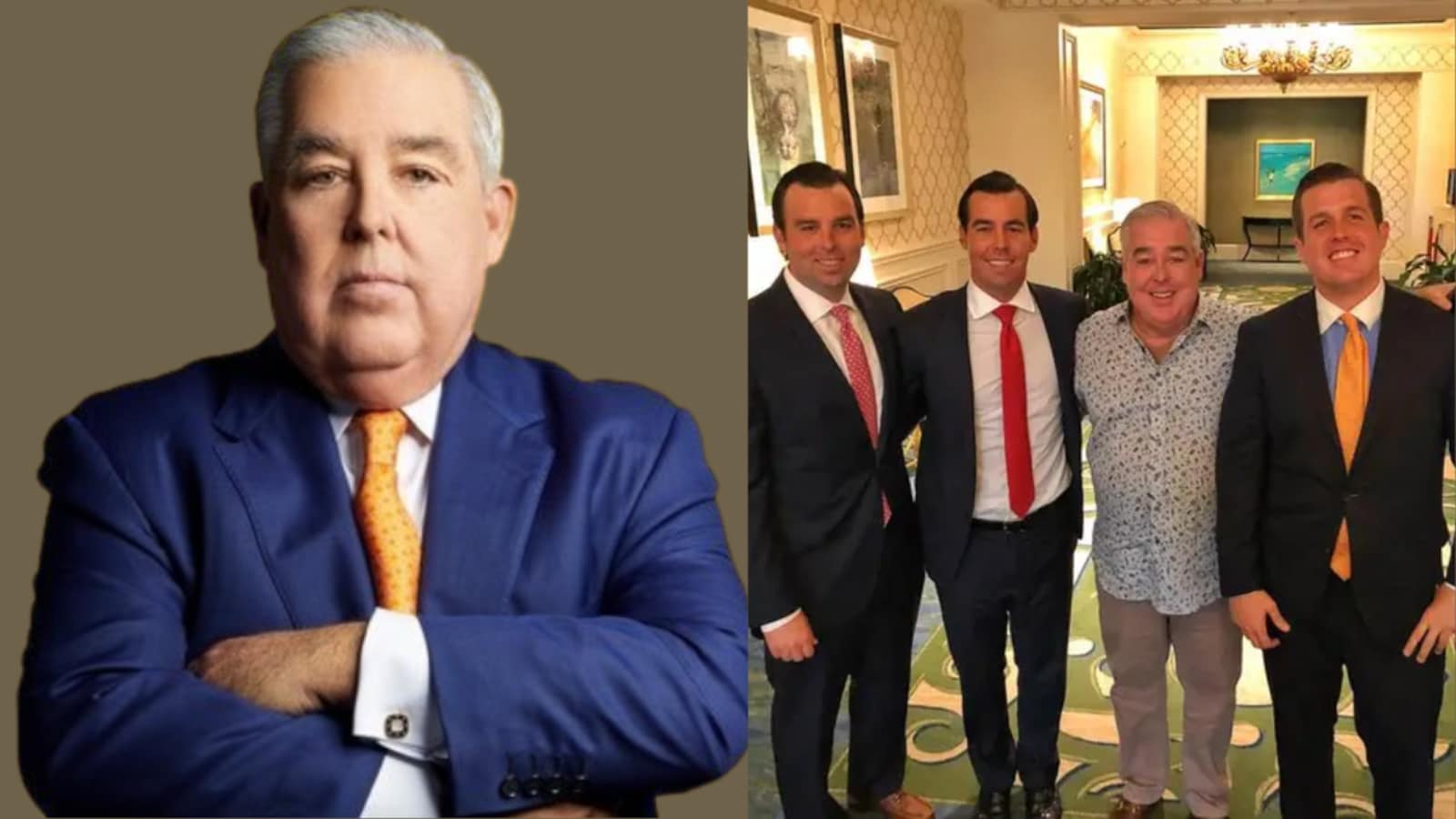
What Morgan Actually Said
Speaking on the Earn Your Leisure podcast hosted by Rashad Bilal and Troy Millings, Morgan laid out a clear condition. His children are required to sign prenuptial agreements before marriage. According to reporting on his comments, a child who marries without signing one would receive only about $1 million per year rather than a share of his billion-dollar wealth.
The framing matters. This is not strictly “inherit nothing,” as some early headlines suggested. It is a capped, structured payout designed to keep the core family fortune intact while still providing for his children at a level most people would consider extraordinary.
Morgan also explained the emotional engineering behind it. He said he deliberately positions himself as the “bad guy” so that his children never have to be the ones demanding a prenup from the person they love. By making it a non-negotiable rule set by the patriarch, he removes the awkward burden from the couple themselves.
Billionaire John Morgan says his children must sign a prenup before getting married or they will only receive $1,000,000 a year
“50% of all marriages are going to end in divorce. That’s just raw numbers. It’s going to happen. An interesting statistic is, for people who marry… pic.twitter.com/oAxDZjH0RU
— dank (@cptdankkk) August 1, 2026
The Reasoning Behind the Rule
Morgan grounded his policy in numbers rather than sentiment. He pointed to the often-cited statistic that around half of all marriages end in divorce, framing it as a raw probability rather than a judgment on any individual couple.
He paired that with a second argument about timing. Morgan encouraged waiting until age 30 to marry, suggesting that couples who wed later face far lower divorce odds. His blunt advice was to have your fun in your twenties and settle down once you have matured.
The logic, from his perspective as a litigator, is straightforward. If a marriage carries meaningful statistical risk of ending, then protecting multigenerational wealth from being split in a future divorce is simply prudent planning, not pessimism.
The Personal Anecdote That Shaped It
Morgan has recounted enforcing this principle within his own family. In one account, when a lawyer declined to recommend a prenup agreement for one of his children, Morgan pushed for the wedding to be postponed unless his son’s fiancée signed. The document was ultimately signed before the ceremony, and by his telling, that couple has now been married for well over a decade.
His stated fear was specific and practical. He did not want anyone in a position to claim half of the family’s assets if a marriage dissolved.
Who Is John Morgan?
John Bryan Morgan, born in 1956 in Lexington, Kentucky, is an American attorney best known as the founder of Morgan & Morgan, headquartered in Orlando, Florida. He and his wife Ultima founded the firm in 1988 with the mission of representing ordinary people against large corporations and insurers.
The firm grew into one of the largest personal injury operations in the United States, employing over a thousand attorneys and thousands of support staff across the country. Morgan became widely known for aggressive advertising, having been among the first lawyers to market heavily on television and in phone books.
In 2025, Forbes listed Morgan among its self-made billionaires, estimating his net worth at roughly $1.5 billion. That fortune is the very thing the prenup rule is designed to protect.
Also Read | Emily Moreno and Max Miller Divorce: Inside Their Legal Battle
Why It Matters
This story resonates for reasons beyond celebrity curiosity.
First, it puts a real face on estate planning that most families avoid discussing. Prenuptial agreements and inheritance conditions are usually private. Morgan made his public and specific, which turns an abstract legal concept into a concrete talking point.
Second, it reframes the prenup from a romance-killer into a wealth-preservation tool. Morgan’s framing treats it as ordinary risk management, the same way a business owner insures an asset.
Third, it highlights a generational-wealth challenge that affects any family with substantial assets, not just billionaires. How do you pass money down without exposing it to the unpredictability of someone else’s marriage?
Social Media Reaction
The comments spread rapidly across platforms, and reactions split along familiar lines.
Many users praised the approach as sensible, calling it an obvious precaution and describing Morgan as a responsible parent for thinking ahead. Prediction-market and finance accounts amplified the quote, with several framing it approvingly as the behavior of a “good dad” who shields his kids from the emotional cost by absorbing the blame himself.
Others found the public nature of the announcement uncomfortable, arguing that broadcasting inheritance conditions turns a private family matter into a spectacle. A recurring counterpoint noted that even the “penalty” tier, a million dollars a year, is a level of security almost no one will ever experience, which complicated the idea of it as a punishment.
Expert Perspective: How Prenups and Inheritance Actually Interact
From an estate-planning standpoint, Morgan’s structure reflects tools that wealth advisors use routinely, even if his phrasing is unusually blunt.
A prenuptial agreement generally defines how assets are divided if a marriage ends, and can specifically wall off inherited or family wealth as separate property. Layered on top, conditional inheritance structures, often built through trusts, can tie distributions to specified conditions.
The practical mechanics usually look like this:
- Prenup: Keeps family wealth classified as separate property, shielding it from division in divorce.
- Trusts: Hold and distribute assets under rules the grantor sets, rather than handing over lump sums.
- Staggered gifting: Passes wealth gradually, reducing tax exposure and keeping heirs motivated.
- Conditional caps: Limit payouts when a condition, such as signing a prenup, is not met.
None of this is legal advice, and enforceability varies by jurisdiction and how agreements are executed. But the broad strokes of Morgan’s plan mirror standard high-net-worth practice.
Comparison: Morgan’s Approach vs. Common Alternatives
| Approach | What It Does | Trade-Off |
|---|---|---|
| Full inheritance, no conditions | Simple, generous | Exposes wealth to divorce and mismanagement |
| Morgan’s capped model | Provides income, protects core fortune | Can feel controlling or public |
| Trust with milestones | Ties money to age or achievements | Requires careful legal setup |
| Total disinheritance | Maximum protection | Can fracture family relationships |
Historical Context: Protecting Dynastic Wealth Is Not New
Wealthy families have wrestled with this problem for centuries. History is full of fortunes that vanished within a generation or two because assets were split, taxed, or spent faster than they were built.
The broader lesson Morgan echoes is one financial historians have long observed: building wealth and preserving it across generations require entirely different skill sets. Aggressive protection mechanisms, whether prenups, trusts, or entailments, exist precisely because inherited money is fragile without them.
Morgan’s contribution is not inventing the concept. It is stating it plainly, in modern terms, on a popular podcast.
Interesting Facts
- Morgan founded his firm in 1988 alongside his wife, Ultima.
- His motivation for becoming a lawyer was personal: his brother Tim was paralyzed in an accident, and the family felt failed by their attorney.
- Morgan was among the earliest lawyers to embrace mass television and phone-book advertising.
- He has been a notable political fundraiser and was a driving force behind Florida’s medical marijuana amendment.
- His firm’s marketing spend has reached into the hundreds of millions annually.
Future Outlook
Expect Morgan’s comments to keep circulating as a reference point in conversations about generational wealth, because they package a complex topic into a memorable rule. As more high-profile figures speak openly about estate planning, the stigma around prenups may continue to soften.
For Morgan personally, the policy signals how he intends his fortune to outlive him: intact, protected, and passed down under conditions he set deliberately rather than left to chance.
Frequently Asked Questions
What is John Morgan’s prenup inheritance rule?
His children must sign a prenuptial agreement before marriage. A child who marries without one would reportedly receive around $1 million per year instead of a full share of his estimated $1.5 billion fortune.
Does that mean his kids get nothing without a prenup?
No. Despite some headlines, it is a cap rather than total disinheritance. The reported figure is roughly $1 million annually, which is a limited payout rather than zero.
Why does John Morgan require prenups?
He cites divorce statistics and a desire to protect family assets. He also says he makes himself the “bad guy” so his children do not have to personally demand a prenup from their partners.
Who is John Morgan?
He is the founder of Morgan & Morgan, one of the largest personal injury law firms in the United States, and a Forbes-listed self-made billionaire estimated at about $1.5 billion.
Where did he reveal this rule?
He discussed it on the Earn Your Leisure podcast during a wider conversation about building and preserving wealth.
Is this common among wealthy families?
Yes, in substance. Prenups, trusts, and conditional inheritance are standard wealth-preservation tools, though Morgan’s blunt public framing is unusual.
Also Read | Ethan Slater Has No Plans To Rekindle Romance With Lilly Jay After Ariana Split
Last Updated on August 3, 2026 by 247 News Around The World