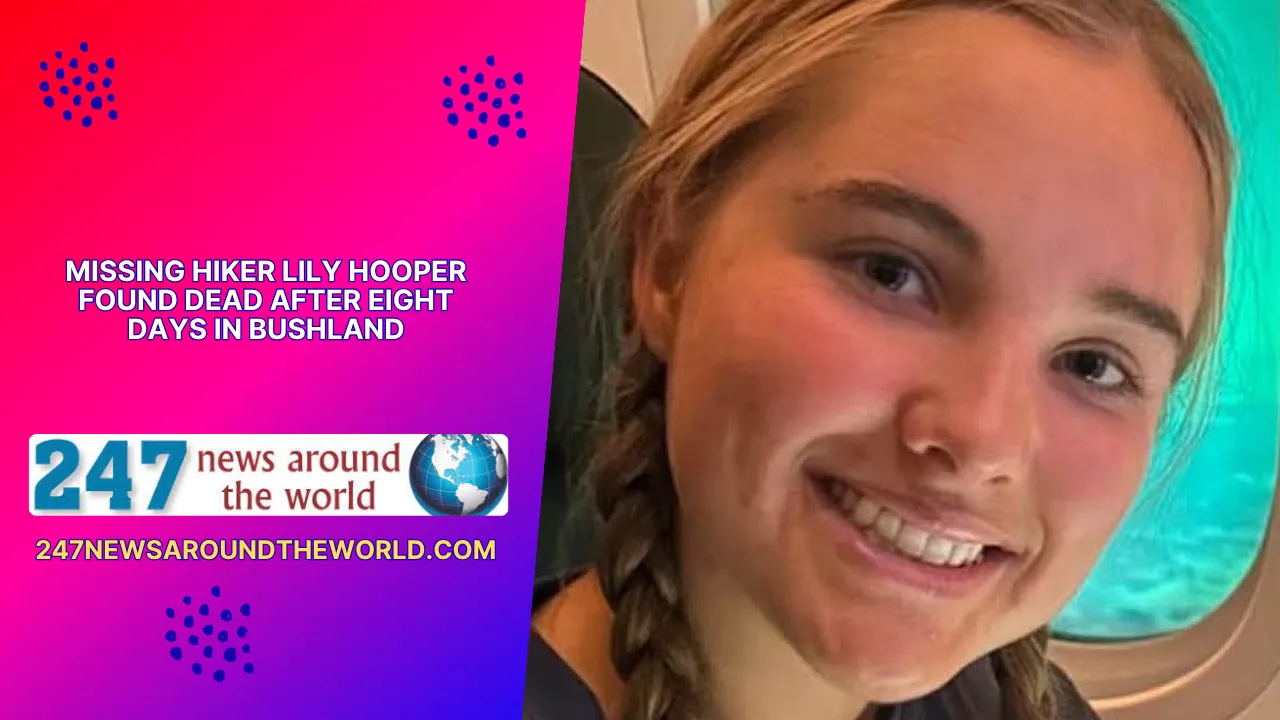

An eight-day search for a missing teenage bushwalker in New South Wales ended on August 20, 2026, with the discovery of a body believed to be 18-year-old Lily Hooper.
The outcome alone would have made national news in Australia. But a devastating communication breakdown made the story harder to bear. Before confirming that Hooper was dead, authorities mistakenly told her family she had been found alive. NSW Premier Chris Minns repeated that information to parliament, and Australian media reported it widely. Minutes later, the news was corrected.
The error meant that Hooper’s parents experienced the worst kind of emotional whiplash: a moment of relief after eight agonizing days, followed almost immediately by the confirmation that their daughter was gone.
Here is what is known about Lily Hooper’s disappearance, the massive search effort, the circumstances of her death, and the communication failure that compounded a family grief.

What Happened: Lily Hooper’s Disappearance
Lily Hooper left her home on Burragorang Road in Oakdale, in Sydney’s southwest, at approximately 8am on Wednesday, August 12, 2026. She told her family she was going for a hike. Her destination was Nattai National Park, a vast and rugged protected area in the Southern Highlands, roughly 60 kilometers northwest of Mittagong.
During the morning, Hooper sent text messages to family members. According to initial police inquiries, she reached the summit of Bonnum Pic by mid-morning. There was no further contact after that.
When Hooper had not returned home by 10pm that evening, her family reported her missing to officers from the Hume Police District. At approximately 11pm the same night, police located her car parked on Wanganderry Road near the start of the Bonnum Pic Walking Trail at High Range, inside the national park.
The country’s heart has been broken with the body of teenager, Lily Hooper, found in bushland in the New South Wales Southern Highlands. Her family’s unbearable grief was made worse when they were initially told she’d been found alive. pic.twitter.com/WX2qFj2oLf
— 7NEWS Queensland (@7NewsBrisbane) August 20, 2026
Who was Lily Hooper?
Hooper was 18 years old, from Oakdale in Sydney’s southwest. Police described her as being of Caucasian appearance, about 175cm (5’9″) tall, slim build, with long blonde hair and blue eyes. When she was last seen, she was wearing a shirt and shorts. It was not known what additional clothing or supplies she had taken for the hike.
Police said they had been told she was an experienced hiker. However, investigators also said it may have been the first time she had walked the Bonnum Pic trail specifically, though this was not confirmed.
Her family issued a statement during the search: “Our family is absolutely devastated that our beloved daughter Lily is missing. We desperately want to bring Lily home safe and we ask as the search continues, to keep our family and Lily in your thoughts.”
The Trail: Why Bonnum Pic Is So Dangerous
Understanding what happened to Lily Hooper requires understanding where she went. The Bonnum Pic Walking Trail is not a casual day walk.
Nattai National Park covers nearly 49,000 hectares (roughly 190 square miles) of steep, densely forested terrain in the Southern Highlands. The park forms part of the UNESCO World Heritage-listed Greater Blue Mountains Area. As of the most recent official information, it has no facilities. The terrain consists of deep ravines, sandstone cliffs, and thick eucalyptus forest. Mobile phone reception is limited throughout the park.
The Bonnum Pic trail itself is classified as suitable for experienced bushwalkers only. Trail descriptions note:
- The route follows a dramatic sandstone ridgeline over roughly 16 to 18 kilometers (out and back).
- Post-fire regrowth has made the trail severely overgrown and difficult to identify. Heavy bush-bashing through prickly scrub is frequently required.
- Navigation skills and a GPS device are considered essential because the path often disappears entirely.
- The final approach to the peak involves hazardous rock scrambling with significant exposure. Some experienced hikers recommend carrying rope for the steepest sections.
Detective Inspector Benjamin Bowles of Hume Police District described the area as “rugged terrain generally used by experienced bushwalkers.” Army survival instructor Gordon Dedman, who assisted with the search, characterized it as “very steep ravines, thick bush” that “can get really cold in winter.”
Read More: Jeremy Clarkson and Tyson Fury Top NTA Documentary Nominees
The Search: Eight Days Across Unforgiving Terrain
The search for Lily Hooper became one of the largest multi-agency wilderness operations in recent NSW history. Hundreds of emergency personnel and volunteers participated over the eight days.
The agencies and units involved included:
- NSW Police Force (including PolAir, the Rescue Unit, Trail Bike Unit, Mounted Unit, and Dog Unit)
- NSW State Emergency Service (SES)
- Rural Fire Service (RFS)
- Fire and Rescue NSW
- National Parks and Wildlife Service
- NSW Ambulance
- Westpac Lifesaver Rescue Helicopter
- Australian Defence Force (reservists from 5th Brigade, Holsworthy Barracks)
- Drones and additional aviation assets
Searchers combed the area on foot, by trail bike, by helicopter, and with drones. The dense canopy and steep terrain limited the effectiveness of aerial searches.
The family’s vigil
Throughout the search, Hooper’s family refused to leave the search zone. They maintained a vigil at the incident command center as teams rotated through the bush. On the fifth day, Hooper’s father made a public appeal for “love and energy” from the community.
Why the search was so difficult
Several factors made finding Hooper extraordinarily challenging:
The terrain is steep and covered with dense vegetation. Sandstone cliff lines create natural barriers that are difficult to navigate even with specialized equipment. Communication between search teams was unreliable because of the rugged topography and limited signal coverage. Conditions were cold, as August is winter in Australia’s Southern Highlands. And the trail itself is poorly marked, meaning there was no guaranteed path to follow in predicting where a hiker might have gone after reaching the summit.
The Discovery and the Communication Error
At approximately 11:30am on Thursday, August 20, an SES volunteer located a body in thick, dense vegetation within the national park. A notification was made to the search command post.
NSW Police said the body had not yet been formally identified but was believed to be Lily Hooper.
Police Commissioner Mal Lanyon said authorities would work to recover the body from the difficult terrain. An attempt to use a helicopter for the recovery was unsuccessful because of the terrain and tree canopy. The body would likely need to be carried out on foot.
A report is being prepared for the coroner. As of the time of this writing, the cause of death has not been publicly confirmed, and police have said there is no information suggesting foul play.
The devastating mistake
What happened next turned a tragedy into something worse.
The initial report from the SES searcher who located the body indicated that Hooper was alive. That information was communicated up the chain: from the search scene to the command post, from the command post to police leadership, from police to the police minister, and from the minister’s office to the Premier.
Hooper’s family was told their daughter had been found alive.
NSW Premier Chris Minns, who was participating in budget estimates hearings in parliament, announced to the chamber that the missing teenager had been found alive. Australian media, including the ABC, immediately reported the news.
Then, eight to ten minutes later, a correction arrived.
Minns interrupted the hearing a second time. Visibly distressed, he said: “I’ve got some terrible news. It seems as if the earlier advice was wrong. Lily’s body has been found. She’d been found deceased. This is obviously devastating, and I’m profoundly sad for her family and for all those concerned. I apologize.”
How the error happened
NSW Police Assistant Commissioner Joseph Cassar explained the sequence at a press conference. The initial report came from searchers operating in thick, dense terrain using handheld communication devices. The searchers initially believed Hooper was alive, and that belief was communicated before a more accurate assessment could be made.
“Within eight to ten minutes we were able to give them an update which was a more accurate account,” Cassar said. He attributed the delay to the challenges of communicating in remote terrain with hundreds of searchers spread across the area.
“If we were able to provide them more detailed information on that first report, I can tell you that would have been the case,” Cassar added, “but unfortunately, it did take that small period of time.”
Apologies from police and the Premier
Commissioner Lanyon apologized “unreservedly” to the Hooper family. He described the initial error as born from the elation of searchers who believed they had finally found the missing teenager, while acknowledging the additional trauma it caused.
Premier Minns issued a written statement: “I genuinely believed I was sharing good news. I am profoundly sorry to think anything I said may have added to their heartbreak at an already devastating time.”
An internal review into the communication breakdown has been announced.
National Response
The case drew responses at the highest levels of Australian politics.
Australian Prime Minister Anthony Albanese addressed parliament, calling Hooper’s death “an unspeakable tragedy.” He said: “Lily Hooper had so much more to offer the world. Her passing, I have no doubt, will be felt very deeply.”
Opposition leader Angus Taylor, who serves as the local MP for the area that includes Oakdale, said the false report compounded the family’s pain. “Initial reports that she had been found alive proved to be wrong, and that makes the blow even worse,” Taylor said. “We can only imagine what Lily’s family is going through right now. Lily loved bushwalking, and that only compounds the tragedy of her death.”
Parliament observed a moment of silence.
What Remains Unanswered
Several significant questions are still pending as of August 20, 2026:
Formal identification: Police said the body is believed to be Lily Hooper’s but formal identification had not yet been completed.
Cause of death: No determination has been made public. A report is being prepared for the coroner. Police have said there is no information to suggest foul play.
Where exactly she was found: The precise location within the park, and how far it was from the Bonnum Pic summit or the trail, has not been specified in public statements. The body was in dense vegetation that made helicopter recovery impossible.
What went wrong on the hike: Whether Hooper became lost after reaching the summit, suffered an injury, was affected by the cold, or encountered another hazard has not been established. These questions will likely be addressed by the coronial investigation.
The communication review: Authorities have said the communication failure will be subject to an internal review. The findings will have implications for how future search-and-rescue operations relay information to families and to government.
Timeline of Events
- August 12, 2026 (8am): Lily Hooper leaves her home in Oakdale, telling family she is going hiking.
- August 12 (mid-morning): Hooper texts family members during her hike. Police later determine she reached the summit of Bonnum Pic around this time. No further contact after this point.
- August 12 (10pm): Family reports Hooper missing after she fails to return home.
- August 12 (11pm): Police locate her car on Wanganderry Road near the Bonnum Pic trailhead.
- August 12-13 (overnight): Search begins immediately with police, SES, and other emergency services. Operations are scaled back after dark for safety.
- August 13-14: Multi-agency search intensifies. Drones, helicopters, trail bikes, and ground crews deployed. Inspector Bowles confirms no indication of foul play.
- August 15-16: Search enters its fourth and fifth days. Hooper’s father makes a public appeal. Family remains at the command center.
- August 17: Search enters sixth day. Community volunteers and additional resources join.
- August 19: Australian Defence Force reservists from 5th Brigade join the search effort.
- August 20 (11:30am): An SES volunteer locates a body in dense bushland. Initial report from the scene indicates the person is alive.
- August 20 (shortly after): Family is told Hooper has been found alive. Premier Minns announces to parliament that she is alive. Media report the news.
- August 20 (8-10 minutes later): Correction arrives. The person has been found deceased. Minns interrupts parliament to correct the record and apologize.
- August 20 (afternoon): Police Commissioner Lanyon and Assistant Commissioner Cassar hold a press conference. Lanyon apologizes unreservedly. Helicopter recovery attempt fails due to terrain. A report is being prepared for the coroner. PM Albanese pays tribute in federal parliament.
Why This Case Resonated
Many families of missing persons endure days or weeks of uncertainty. What made the Hooper case especially painful was that the family’s uncertainty ended twice: once with relief, and then again with finality. That eight-to-ten-minute window, during which Hooper’s parents believed their daughter was alive, has become the focal point of public discussion. It raises real questions about how information is communicated during search-and-rescue operations, and what protocols should exist before families are notified.
The risks of solo hiking in remote terrain
Hooper’s case is a reminder that even experienced hikers face serious danger on trails like Bonnum Pic. The trail is poorly marked, physically demanding, and located in an area with no facilities and limited phone reception. Wilderness safety organizations consistently recommend that hikers in such areas carry GPS devices, file trip intention forms, inform someone of their planned route and expected return time, and avoid hiking alone in remote terrain.
None of this should be read as blame. Hooper did tell her family she was going hiking, and she did communicate with them during the morning. But her case will inevitably feed into the ongoing conversation in Australia about the safety of solo bushwalking in remote national parks.
Frequently Asked Questions
Who was Lily Hooper?
Lily Hooper was an 18-year-old from Oakdale, in Sydney’s southwest. She was described as an experienced bushwalker. She went missing on August 12, 2026, while hiking in Nattai National Park and was found dead on August 20.
Where was Lily Hooper found?
Her body was found in dense bushland within Nattai National Park in the NSW Southern Highlands. The exact location has not been publicly specified.
How long was Lily Hooper missing?
She was missing for eight days, from August 12 to August 20, 2026.
What is the Bonnum Pic Walking Trail?
It is a challenging 16-to-18-kilometer out-and-back bushwalking trail in Nattai National Park. It follows a sandstone ridgeline and is classified as suitable for experienced bushwalkers only. The trail is often overgrown and poorly marked, and the final section involves exposed rock scrambling.
Why was her family told she was alive?
Searchers who located the body initially reported that the person was alive. That preliminary information was relayed up the chain of command to the family, police leadership, and the NSW Premier before being corrected eight to ten minutes later. Police attributed the error to communication difficulties in the remote, densely vegetated terrain.
Did the NSW Premier announce she was alive?
Yes. Premier Chris Minns told parliament during a budget estimates hearing that Hooper had been found alive. He later interrupted proceedings to correct the information and apologize.
How did Lily Hooper die?
The cause of death has not been publicly confirmed. A report is being prepared for the coroner. Police have said there is no information suggesting foul play.
What is Nattai National Park?
It is a nearly 49,000-hectare national park in the Southern Highlands of New South Wales, approximately 150 kilometers southwest of Sydney. It is part of the UNESCO World Heritage-listed Greater Blue Mountains Area and consists of steep ravines, sandstone cliffs, and dense eucalyptus forest. The park has no facilities and limited mobile phone reception.
Who found Lily Hooper’s body?
An SES (State Emergency Service) volunteer located the body at approximately 11:30am on Thursday, August 20.
Also Read: David Krumholtz Wife Vanessa Britting, Their Two Kids and Acting Exit
Last Updated on August 20, 2026 by 247 News Around The World