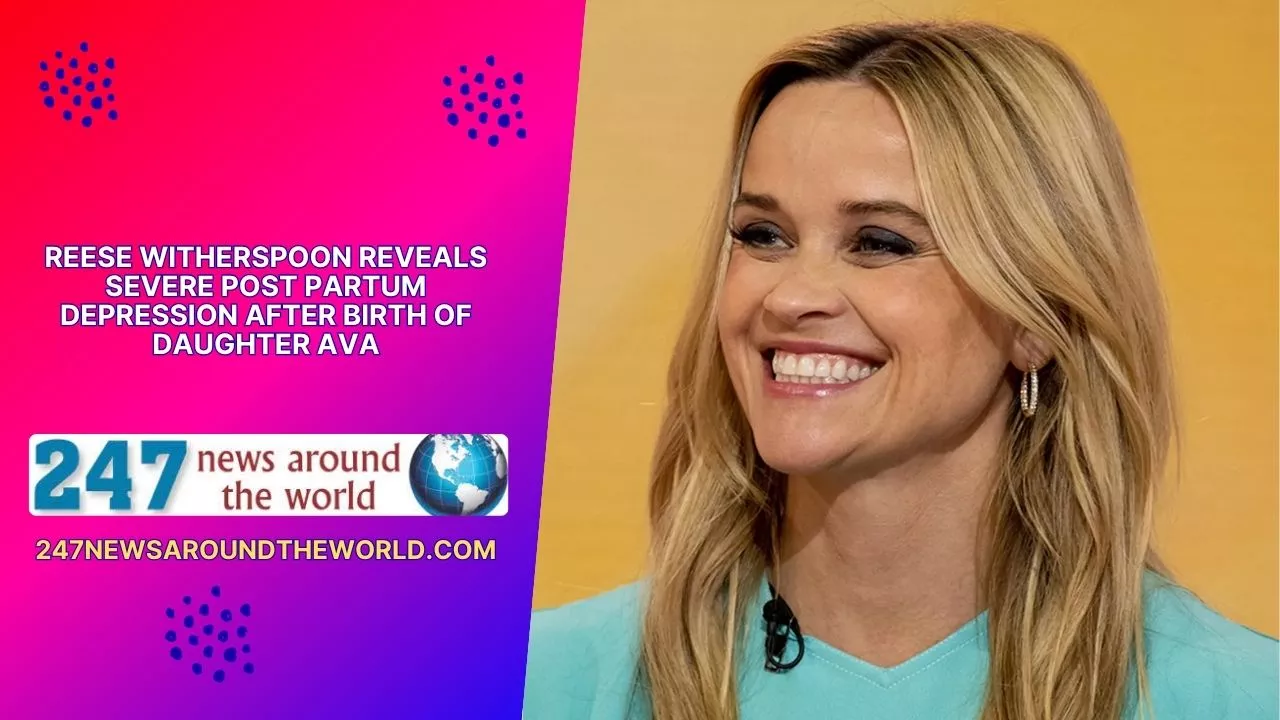

Reese Witherspoon, the Oscar winning actress, producer, and Hello Sunshine founder, has spoken in detail about the severe postpartum depression she experienced after the birth of her first child, daughter Ava Phillippe, in 1999. In an interview with Harper’s Bazaar for their December/January issue, published in November 2025, Witherspoon described the months after becoming a mother at 23 as a period of constant crying, sleepless nights, and hormonal shifts that left her feeling simultaneously happy and deeply depressed.
Her account adds new specificity to something she has discussed before, including a 2020 podcast interview in which she shared that her experience with postpartum depression was different after each of her three children. This article covers exactly what Witherspoon said in the Harper’s Bazaar interview, how her experience compares with what she has revealed previously, the family history that played a role, and the broader context of postpartum depression in and beyond the public eye.
What Reese Witherspoon Said About Her Postpartum Depression
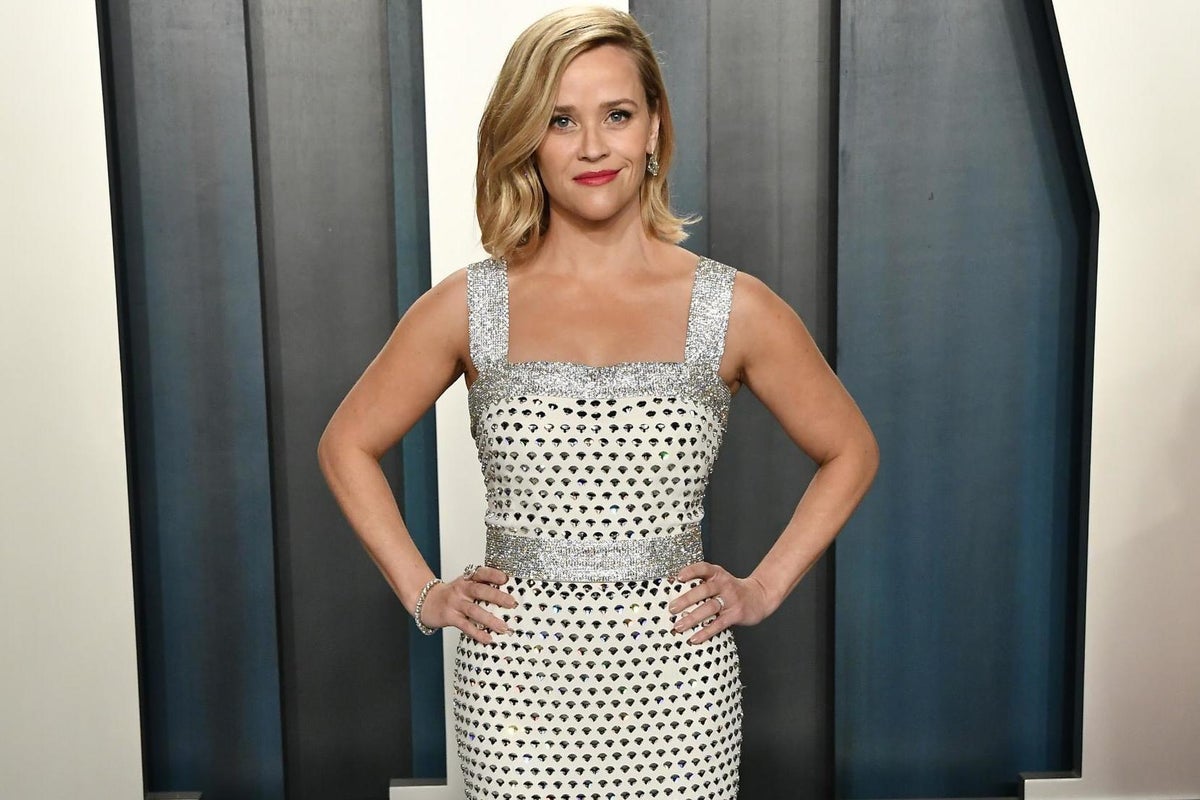
Speaking to Harper’s Bazaar, Witherspoon described the first six months after Ava’s birth as particularly difficult. She recalled being “simultaneously happy and depressed,” constantly in tears, awake through the night, and exhausted. She pointed to a hormonal drop she had not anticipated, which she said she experienced both immediately after giving birth and again six months later when she stopped nursing.
Reese Witherspoon also described the social pressure that compounded her emotional state. She said that being a young mother meant facing a flood of opinions from other people about everything from how to give birth to how to nurse and feed her baby, and she called the volume of unsolicited advice “inundating.”
Despite the difficulty, she acknowledged that she was fortunate to have both the connections and the financial means to get to a doctor and a mental health specialist, and she was direct about the fact that many people in similar situations do not have that access. She noted that women without those resources often struggle alone and hide what they are going through.
Fact Box: Key Details From the Harper’s Bazaar Interview
| Detail | What Witherspoon Said |
|---|---|
| When it hit hardest | First six months after Ava’s birth (1999) |
| How old she was | 23 |
| How she described it | “Simultaneously happy and depressed” |
| Primary symptoms | Constant crying, sleepless nights, exhaustion |
| What triggered it | Hormonal drop after birth and again after stopping nursing |
| Access to care | Had the means to reach a doctor and mental health specialist |
| Her concern for others | Many women struggle alone without access to care |
Witherspoon’s Family History With Depression
One of the more detailed parts of Witherspoon’s account is the family context behind her experience. She credited her mother, Betty Reese, a longtime pediatric nurse, with teaching her to monitor her own symptoms. Witherspoon said her mother had experienced depression herself and feared the condition could be passed down genetically. That concern turned out to be well founded, as Witherspoon said she first began experiencing depression as a teenager and has managed it in various forms throughout her adult life.
She also referenced her grandmother, Dorothea Draper, who went through similar struggles, framing the pattern as something that stretched across three generations of women in her family.
Witherspoon praised her mother for creating a home where emotions were never treated as something forbidden, saying her mother never discussed mental health in a way that made it feel unreachable or off limits. That openness, she said, gave her a foundation to recognize what was happening to her after Ava was born rather than ignoring it.
A Different Experience With Each Child: What Witherspoon Said in 2020
The Harper’s Bazaar interview is not the first time Witherspoon has spoken publicly about postpartum depression. In 2020, she appeared on actress Jameela Jamil’s “I Weigh” podcast and shared a broader view of how differently the condition affected her after the birth of each of her three children.
She described having mild postpartum depression after one child, severe postpartum depression requiring heavy medication after another because she “wasn’t thinking straight at all,” and no postpartum depression at all after her third.
She also discussed the hormonal crash that followed weaning her first child, saying that no one had explained to her at 23 what it would feel like when she stopped nursing. She described feeling “more depressed than I’d ever felt in my whole life” during that period and called it “scary.”
Comparison Table: What Witherspoon Has Said Over Time
| Interview | Year | Key Detail |
|---|---|---|
| Jameela Jamil’s “I Weigh” podcast | 2020 | Described three different postpartum experiences across three children (mild, severe requiring medication, none) |
| Harper’s Bazaar (Dec/Jan issue) | 2025 | Focused specifically on the first six months after Ava’s birth; described hormonal drops, constant crying, and the difficulty of being a 23 year old mother |
These two interviews work together to paint a fuller picture than either one offers alone. The 2020 podcast interview established the range of her experiences, while the 2025 Harper’s Bazaar piece fills in specific emotional and physical details about the worst of them.
Timeline: Key Moments in Reese Witherspoon’s Personal and Professional Life
| Year | Event |
|---|---|
| 1976 | Born Laura Jeanne Reese Witherspoon in New Orleans, Louisiana |
| 1991 | First film role at age 14 |
| 1996 | Gained attention for roles in “Freeway” and “Fear” |
| 1999 | Breakthrough with “Election” and “Cruel Intentions”; daughter Ava Phillippe born; experienced severe postpartum depression |
| 2001 | Starred in “Legally Blonde” |
| 2003 | Son Deacon Phillippe born |
| 2005 | Won the Academy Award for Best Actress for “Walk the Line” |
| 2012 | Son Tennessee James Toth born |
| 2014 | Produced and starred in “Wild,” earning a second Academy Award nomination |
| 2016 | Founded Hello Sunshine, a media company focused on female driven storytelling |
| 2017 | Produced and starred in “Big Little Lies” |
| 2020 | Spoke about postpartum depression on Jameela Jamil’s “I Weigh” podcast |
| 2021 | Sold Hello Sunshine to Blackstone in a deal reported at approximately $900 million |
| 2025 | Named one of Harper’s Bazaar’s Women of the Year; shared detailed account of postpartum depression |
Why Witherspoon Credits Anxiety for Her Professional Success
One striking detail from the Harper’s Bazaar interview was Witherspoon’s reflection on the connection between her mental health and her career trajectory. She said she believes her professional success was partly driven by the anxiety she has carried since adolescence, explaining that the two “go hand in hand” and that she had pushed herself to extreme levels to show up at work in what she described as a perfect way.
She added a qualifier, noting that she now recognizes perfectionism as neither attainable nor sustainable, a perspective she said has evolved over time. For readers familiar with Witherspoon’s public trajectory, from becoming an A-list actress in her twenties to building a media company valued at nearly $1 billion, her willingness to attribute part of that drive to the same anxiety she has spent decades managing adds a layer of context that is rarely attached to stories about her professional accomplishments.
How Witherspoon’s Approach to Mental Health Has Evolved
Witherspoon’s Harper’s Bazaar interview fits into a longer pattern of increasingly detailed public conversations about her mental health. In 2020, the “I Weigh” podcast discussion was framed primarily around the stigma of asking for help and the broader need to believe women when they describe what they are going through. By 2025, the conversation had shifted toward specific family history, the hormonal mechanics she wished had been explained to her earlier, and the privilege gap between mothers who can access care and those who cannot.
She has spoken publicly about using a combination of approaches to manage her mental health, and she has consistently framed her openness as an effort to make the topic feel approachable rather than frightening for other mothers.
This progression matters because it reflects a broader cultural shift in how public figures talk about postpartum depression. Witherspoon’s earliest public comments on the subject were relatively general. Her more recent interviews are significantly more specific, discussing the physical experience of hormonal drops, the emotional reality of early motherhood, and the systemic barriers that prevent many women from getting the same help she was able to access.
Postpartum Depression by the Numbers: What the Research Shows
For readers looking for broader context beyond Witherspoon’s personal experience, postpartum depression is one of the most common complications of childbirth. According to the American College of Obstetricians and Gynecologists, it affects roughly 1 in 7 new mothers. Symptoms typically begin within the first few weeks after delivery but can appear up to a year later, and they can range from persistent sadness, fatigue, and difficulty bonding with a newborn to severe episodes that require medication and professional support.
Witherspoon’s description of a second hormonal drop after weaning her baby aligns with what researchers have identified as a less well known trigger. The hormonal shift that occurs when a mother stops breastfeeding can produce depressive symptoms in some women, though it receives significantly less attention in most prenatal and postnatal counseling than the immediate postpartum period does.
Frequently Asked Questions
Did Reese Witherspoon have postpartum depression?
Yes. Witherspoon has spoken publicly about experiencing postpartum depression after the birth of her first child, daughter Ava Phillippe, in 1999, and described it as “really bad” in a 2025 interview with Harper’s Bazaar.
How many children does Reese Witherspoon have?
Three. Ava Phillippe (born 1999) and Deacon Phillippe (born 2003), both with ex-husband Ryan Phillippe, and Tennessee James Toth (born 2012), with ex-husband Jim Toth.
Was Reese Witherspoon’s postpartum depression the same with each child?
No. In a 2020 podcast interview with Jameela Jamil, Witherspoon said she had a different experience after each child: mild postpartum depression with one, severe postpartum depression requiring medication with another, and none at all with a third.
What did Reese Witherspoon say about access to postpartum care?
She said she was fortunate to have the connections and financial means to reach a doctor and a mental health specialist, and that many women without those resources struggle alone and hide their symptoms.
When did Reese Witherspoon found Hello Sunshine?
She founded Hello Sunshine, a media company focused on female driven storytelling, in 2016. It was acquired by Blackstone in 2021 in a deal reported at approximately $900 million.
Does depression run in Reese Witherspoon’s family?
Witherspoon said her mother had depression and feared it could be genetic. She also referenced her grandmother going through similar struggles, placing the pattern across three generations.
Also Read: Barbara Eden, 95, Cancels Film Festival Appearance, Reveals She Is Okay
Last Updated on September 7, 2026 by 247 News Around The World