
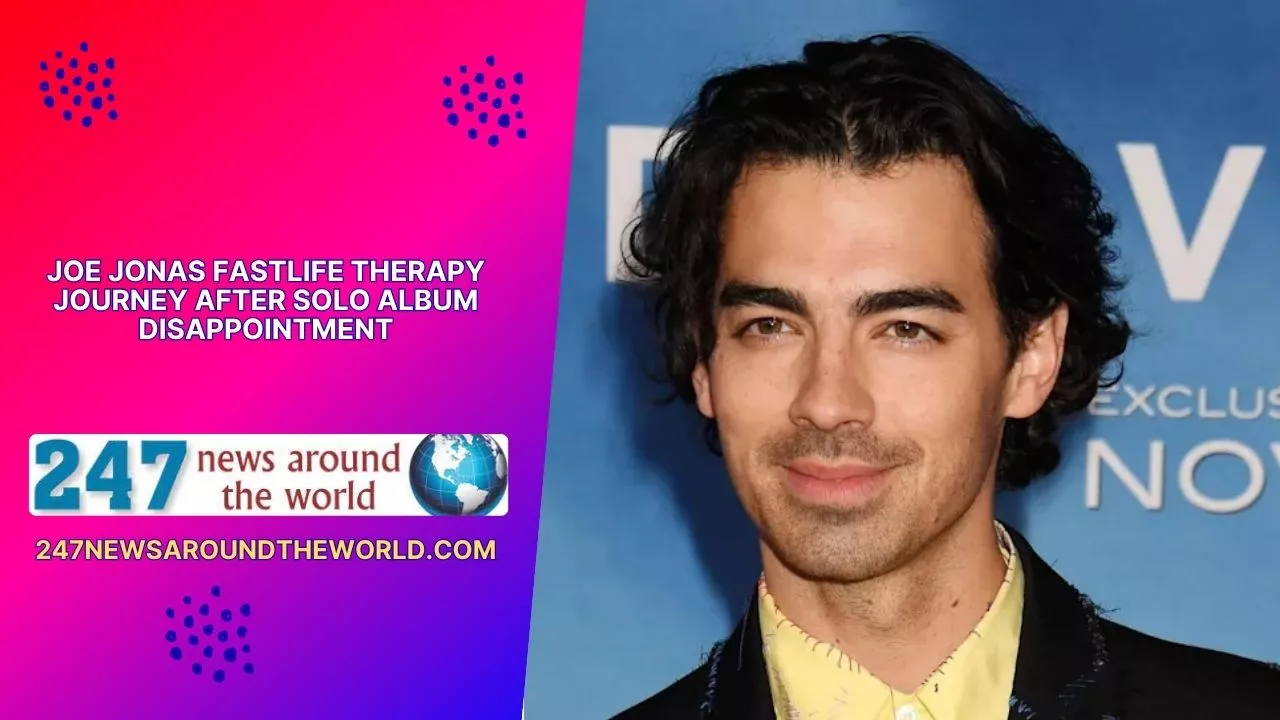

Joe Jonas has built a career defined by reinvention. From teen pop stardom with the Jonas Brothers to forming DNCE and eventually launching a second solo chapter, the singer has never stayed in one lane for long. But behind the public image of a confident pop star lies a story that Jonas kept mostly private for over a decade.
During the August 4, 2026, episode of the Hey Jonas podcast, Joe sat alongside his brothers Nick and Kevin to discuss a period that reshaped his entire approach to well-being. The conversation centered on his 2011 debut solo album, Fastlife, and how its disappointing commercial reception sent him into a spiral of anxiety, self-doubt, and physical symptoms that eventually led him to seek professional therapy for the first time.
What makes this particular disclosure significant is not just the vulnerability of the admission. It is the fact that Jonas directly connected a career setback to the beginning of his mental health journey, and that journey has now influenced nearly every professional and personal decision he has made in the 15 years since. This is the full story of what happened, why it mattered, and what it tells us about the relationship between artistic identity, commercial validation, and emotional health in the modern music industry.

What Happened: Joe Jonas Opens Up on the Hey Jonas Podcast
On August 4, 2026, the Jonas Brothers released an episode of their Hey Jonas podcast billed as a “Brothers Only” conversation. Without any guest, the three siblings spoke freely about the pressures of fame, artistic ambition, and the emotional toll of growing up in the public eye.
Joe used the conversation to reveal, in greater detail than ever before, that his decision to begin therapy was a direct result of the poor performance of Fastlife.
He explained that after years of automatic success with the Jonas Brothers, he assumed that stepping out as a solo artist would produce the same results. When it did not, the disconnect between expectation and reality hit him harder than he anticipated.
He told his brothers that he had high expectations of achieving success without them. Deep down, he admitted, he believed that proving himself on his own would confirm that he mattered as an individual artist, not just as one-third of a group. When the album’s numbers came in far below those expectations, the emotional fallout was immediate and intense.
The Physical Symptoms
The stress did not remain purely emotional. Jonas described experiencing panic attacks and unexplained physical pain in the weeks and months after the album’s release. Concerned about a potential medical issue, he visited multiple doctors, including an endocrinologist, who ultimately confirmed that there was nothing physically wrong with him.
It was this doctor who made the suggestion that would change his life: she recommended he speak with a therapist.
Resistance and Breakthrough
Jonas admitted on the podcast that his initial reaction to the therapy suggestion was dismissive. He recalled thinking that he was fine, that he could talk to his friends about his problems, and that sweating it out at the gym was sufficient self-care. The idea that he needed a professional seemed unnecessary to him at the time.
Eventually, he gave in. And in his first session, he cried through the opening question for an entire hour. That moment, he said, was when he realized how much he had been carrying and how valuable the process would be.
He acknowledged that consistency with therapy has been a challenge over the years, but the practice has remained an essential part of how he handles major life transitions, both professionally and personally.
Background Story: The Rise and Fall of Fastlife
To understand why Fastlife‘s commercial performance affected Jonas so deeply, it helps to understand the cultural moment that preceded it.
The Jonas Brothers at Their Peak
Between 2007 and 2009, the Jonas Brothers were among the most commercially dominant acts in pop music. Their self-titled album (2007) and A Little Bit Longer (2008) both debuted at or near the top of the Billboard 200. They headlined sold-out arena tours, starred in the Disney Channel film Camp Rock and its sequel, and had their own television series, Jonas L.A. Their third album, Lines, Vines and Trying Times (2009), debuted at number one.
Everything the Jonas Brothers released during this window performed at the highest commercial tier. Gold and platinum certifications were routine. For Joe, who shared lead vocal duties with Nick, this level of success became the baseline for what a music release was supposed to look like.
Going Solo
The Jonas Brothers went on hiatus in 2010, and Joe used the break to record his first solo project. Fastlife was released on October 11, 2011, through Hollywood Records, the Disney-affiliated label that had been home to the Jonas Brothers.
Musically, the album represented a deliberate departure. Jonas worked with urban-leaning producers like Danja (a longtime Timbaland collaborator), Hit-Boy, and Chris Brown to create a sound rooted in electropop, R&B, and dance-pop. The intent was clear: Joe wanted to present a more mature, club-ready version of himself, distancing from the pop-rock formula that had defined his band.
The lead single, “See No More,” co-written with Chris Brown, received modest critical praise. Some reviewers called it a promising start to a solo career. The second single, “Just in Love,” continued the R&B-pop direction but generated less attention.
The Numbers
When Fastlife arrived, the commercial picture was stark:
- First-week sales: Approximately 18,000 copies
- Billboard 200 debut: Number 15
- Second-week position: Number 122
- “See No More” Hot 100 peak: Number 92
- Total U.S. sales by 2015: Approximately 45,000 copies
- RIAA certification: None
For context, the Jonas Brothers’ Lines, Vines and Trying Times had debuted at number one just two years earlier with 247,000 first-week copies. The gap between those figures and Fastlife‘s performance was enormous.
The album also fell quickly from the chart, suggesting limited sustained interest beyond Joe’s existing fanbase. It never received any RIAA certification, and it would become his only solo release for nearly 14 years.
Timeline: Key Moments in Joe Jonas’s Career and Mental Health Journey
| Year | Event |
|---|---|
| 2005 | Jonas Brothers form and sign their first record deal |
| 2007-2009 | Peak commercial success: multiple chart-topping albums, Disney films, arena tours |
| 2010 | Jonas Brothers go on hiatus; Joe begins recording Fastlife |
| October 2011 | Fastlife released; sells 18,000 copies in first week |
| Late 2011-2012 | Joe experiences panic attacks, physical symptoms; begins therapy after doctor’s recommendation |
| October 2013 | Jonas Brothers officially break up, canceling tour and scrapping album V |
| 2015 | Joe forms DNCE; “Cake by the Ocean” becomes a global hit |
| 2019 | Jonas Brothers reunite; Happiness Begins debuts at number one |
| May 2025 | Joe releases second solo album, Music for People Who Believe in Love, through Republic Records |
| August 2025 | Jonas Brothers release seventh studio album, Greetings from Your Hometown; begin 20th anniversary tour |
| August 4, 2026 | Joe discusses Fastlife and therapy in detail on Hey Jonas podcast |
| August 6-7, 2026 | Comments draw mixed reactions online; some critics question linking chart failure to therapy |
Why This Matters: Identity, Validation, and Self-Worth in the Music Industry
Joe Jonas’s disclosure is more than a celebrity sharing a personal anecdote. It highlights a pattern that is well-documented but rarely discussed so directly: the way commercial performance becomes entangled with an artist’s sense of personal value.
The Identity Trap
For artists who achieve fame as part of a group, particularly at a young age, the question of individual worth is always present. When Joe said he believed that solo success would prove he mattered, he was articulating something that many musicians in similar positions have described but few have connected so explicitly to seeking professional help.
The Jonas Brothers’ success was collective. Stepping away from that framework meant testing whether Joe Jonas the individual could command attention on his own terms. When Fastlife underperformed, the answer felt like a rejection, not just of the music, but of him personally.
Coping Mechanisms Before Therapy
On the podcast, Joe also described a coping strategy that many people will recognize. He mentioned going on long bike rides across New York City as a way to avoid scrolling through negative online commentary about the album. While the physical activity provided temporary relief, he acknowledged that it was fundamentally a form of avoidance rather than genuine processing.
This distinction between distraction and meaningful emotional work is one that mental health professionals frequently emphasize. Joe’s willingness to name his bike rides as a form of running away, rather than framing them as healthy self-care, reflects the kind of self-awareness that therapy helped him develop.
Also Read | Cardi B and Stefon Diggs Relationship Status and On-and-Off Timeline
The Comeback Arc: From Fastlife to DNCE to Reunion
One of the most instructive aspects of Joe Jonas’s story is what happened after the Fastlife period.
DNCE and the Reset
After the Jonas Brothers officially split in October 2013, Joe spent roughly two years recalibrating. In 2015, he formed DNCE alongside guitarist JinJoo Lee, bassist Cole Whittle, and drummer Jack Lawless (who had previously toured with the Jonas Brothers).
The band’s approach was deliberately different from Fastlife. Where the solo album had chased trends and tried to position Joe as an R&B-pop solo star, DNCE leaned into fun, irreverence, and a disco-funk energy that felt genuine to Jonas’s personality.
Crucially, Joe revealed in interviews that DNCE initially released music online without announcing that he was in the band. This allowed listeners to discover the songs without the baggage of Jonas Brothers expectations. The strategy worked spectacularly: “Cake by the Ocean” reached number nine on the Billboard Hot 100 and earned multi-platinum certifications in multiple countries.
Joe later described the DNCE experience as especially meaningful because it proved he could connect with an audience that chose his music on its own merits, not because of pre-existing loyalty to a brand.
The Jonas Brothers Reunion
In 2019, the Jonas Brothers reunited with the single “Sucker,” which debuted at number one on the Hot 100. Their comeback album, Happiness Begins, also debuted at the top of the Billboard 200. The reunion tour sold out arenas worldwide.
The brothers have continued releasing music together since, including The Album (2023) and Greetings from Your Hometown (August 2025), their seventh studio album. As of 2026, they are in the midst of their Jonas20 anniversary tour, a 90-date run celebrating two decades as a band.
The Second Solo Album
In May 2025, Joe released Music for People Who Believe in Love through Republic Records, his first solo project since Fastlife. The album debuted at number 24 on the Billboard 200 with approximately 17,000 pure copies, and reached number three on the Top Album Sales chart.
While the raw numbers were similar to Fastlife‘s, the context was entirely different. Joe described the album as his most personal work. He approached the release with a mature perspective, free from the pressure to prove his worth through chart positions. The album featured collaborations with artists like Sierra Ferrell, Luisa Sonza, and his younger brother Frankie Jonas, and received critical praise for its emotional honesty and stylistic range.
Social Media Reaction and the “Therapy for Flopping” Debate
Joe’s podcast comments, which gained wider circulation in the days following the August 4 episode, generated a divided response online.
Some commenters questioned whether poor album sales constituted a legitimate reason to seek therapy. One widely shared post stated that normalizing therapy simply because an album underperformed on the charts was not something that should be encouraged. The criticism reflected a broader skepticism that some people hold toward celebrity mental health disclosures, particularly when the trigger is a professional disappointment rather than a more traditionally recognized form of trauma.
On the other side of the conversation, supporters argued that tying self-worth to external validation is a recognized psychological pattern that affects people across all professions, not just entertainment. They pointed out that Joe’s experience, including the panic attacks, physical symptoms, and initial resistance to seeking help, mirrored what many non-famous individuals go through when facing career setbacks or perceived failures.
The debate itself became a broader discussion about mental health stigma, the specific pressures of early fame, and whether the public holds celebrities to a different standard when it comes to what constitutes a valid reason for seeking professional support.
Expert Context: Mental Health in the Music Industry
Joe Jonas’s experience fits within a well-documented pattern of mental health challenges among professional musicians.
Research published in The Lancet Psychiatry has noted that professional musicians in the popular music industries show elevated levels of mental health difficulties compared to the general population. The combination of public scrutiny, inconsistent income, creative vulnerability, and the pressure to maintain relevance creates a psychological environment that can be particularly difficult to navigate without professional support.
Several of Joe’s peers in the industry have shared similar stories. His brother Nick Jonas has discussed how a poorly received guitar performance at the 2016 Academy of Country Music Awards led him to begin therapy. Demi Lovato, who starred alongside the Jonas Brothers in Camp Rock and has been open about her mental health since 2011, has spoken extensively about how the pressures of Disney-era fame contributed to her struggles with bipolar disorder and substance use.
The music industry has responded to these concerns with increased attention to artist welfare. Major record labels and organizations like MusicCares have expanded mental health resources for artists, though critics argue that systemic changes in how labels manage young talent are still needed.
Interesting Facts About Joe Jonas and the Fastlife Era
- Label pressure shaped the sound: Joe later revealed in a 2015 Billboard interview that Hollywood Records pushed him toward an R&B direction for Fastlife when his original instinct was closer to a “Hall & Oates meets disco-funk” style, a sound he would eventually pursue successfully with DNCE.
- A 14-year gap between solo albums: Fastlife (2011) and Music for People Who Believe in Love (2025) are separated by nearly a decade and a half, one of the longer gaps between solo releases for any major pop artist of his generation.
- Total U.S. sales never qualified for any RIAA certification: The album sold approximately 45,000 copies in the United States by 2015, well below the 500,000 threshold for a gold certification.
- The lead single had a strong start: “See No More” received positive early reviews, with some critics praising Joe’s move toward a more mature R&B-influenced sound. The disconnect between critical reception and commercial performance made the outcome more disorienting for Joe.
- Joe credits therapy with helping him through his 2023 divorce: While the Fastlife era was the entry point, Jonas has stated that therapy has been essential for processing other major life events, including his separation from actress Sophie Turner, with whom he shares two daughters.
Career Impact: What Fastlife Changed
The commercial failure of Fastlife had both immediate and long-term effects on Joe Jonas’s career trajectory.
In the short term, it reinforced the perception that Jonas Brothers members were not viable solo acts, a perception that Nick Jonas would later challenge with his 2014 self-titled album and hits like “Jealous” and “Chains.” Joe’s inability to replicate that solo success on his first attempt meant that for several years, he was seen as the middle brother who had not yet found his individual artistic voice.
In the long term, however, the Fastlife experience informed nearly every creative decision Joe made afterward. DNCE’s formation was a direct response to the lessons he learned. Instead of chasing an image, he built a band around a sound that felt authentic. Instead of relying on his existing fanbase, he tested whether new listeners would find the music on its own.
The second solo album, released 14 years later, carries that same philosophy forward. Joe described Music for People Who Believe in Love as coming from a place of gratitude and self-acceptance rather than a need to prove anything.
Historical Comparison: Solo Album Struggles Among Boy Band Members
Joe Jonas is far from the only member of a successful group to face a challenging solo debut. The pattern is remarkably consistent across generations of pop music.
Members of major groups who debut solo often face an audience that is loyal to the collective but uncertain about the individual. The expectations are set by the group’s commercial peak, and anything short of that performance is perceived as a failure, even when the numbers would be respectable for a new artist.
What distinguishes Joe’s story is the directness with which he connected commercial performance to mental health consequences. While many artists have discussed the pressures of fame in general terms, Jonas’s willingness to trace a specific psychological outcome (panic attacks, physical symptoms, eventual therapy) to a specific professional event (18,000 first-week sales) provides a concrete case study in how artistic identity and commercial metrics can become dangerously intertwined.
Future Outlook: Where Joe Jonas Goes From Here
As of August 2026, Joe Jonas is in a notably stable phase of his career. The Jonas Brothers are in the middle of their Jonas20 anniversary tour, a 90-concert run across North America and South America that celebrates two decades since the band’s formation. Their most recent studio album, Greetings from Your Hometown, was released in August 2025 and featured collaborations with Switchfoot, Dean Lewis, and Marshmello.
Joe’s second solo album has established that he can release personal, critically well-received music without the pressure that derailed his mental health in 2011. His continued openness about therapy, including during a TalkShopLive appearance in May 2025 where he discussed attending sessions via Zoom, suggests that mental health advocacy will remain a consistent part of his public identity.
The Hey Jonas podcast itself has become a significant platform for the brothers to discuss topics that go beyond typical promotional interviews. The August 2026 episode’s impact demonstrates that audiences are interested in these more substantive conversations, and that the Jonas Brothers are willing to have them.
Frequently Asked Questions
Why did Joe Jonas start therapy?
Joe Jonas began therapy after the commercial failure of his 2011 solo album, Fastlife. The disappointing sales triggered panic attacks and unexplained physical symptoms. After a doctor confirmed he was physically healthy, she recommended he speak with a therapist. He initially resisted the idea but eventually agreed and found the experience transformative.
How many copies did Fastlife sell?
Fastlife sold approximately 18,000 copies in its first week and debuted at number 15 on the Billboard 200. By 2015, total U.S. sales reached roughly 45,000 copies. The album never received any RIAA certification.
What podcast did Joe Jonas discuss therapy on?
Joe discussed his therapy journey on the Hey Jonas podcast, during a “Brothers Only” episode that aired on August 4, 2026. He was joined by his brothers Nick Jonas and Kevin Jonas.
What is Joe Jonas’s second solo album?
Joe’s second solo album is Music for People Who Believe in Love, released on May 23, 2025, through Republic Records. It was his first solo project since Fastlife in 2011, a gap of nearly 14 years.
Did Joe Jonas face backlash for his therapy comments?
Yes. After clips from the podcast circulated online, some commenters criticized Jonas for linking therapy to album sales, suggesting that chart performance was not a valid reason to seek professional help. Others defended him, arguing that tying self-worth to external validation is a well-documented psychological pattern that affects people across all industries.
What is DNCE and how is it connected to the Fastlife era?
DNCE is a funk-pop band that Joe Jonas formed in 2015 after the Jonas Brothers’ 2013 breakup. The band was a direct creative pivot from the Fastlife approach. Their debut single, “Cake by the Ocean,” became a top-10 Billboard Hot 100 hit and earned multi-platinum certifications globally.
Are the Jonas Brothers still active in 2026?
Yes. The Jonas Brothers are currently on their Jonas20: Greetings from Your Hometown Tour, a 90-date concert tour celebrating their 20th anniversary as a band. Their seventh studio album, Greetings from Your Hometown, was released in August 2025.
Also Read | Celeste Rivas Hernandez Final Moments: Inside the Alleged Ambush
Last Updated on August 7, 2026 by 247 News Around The World