
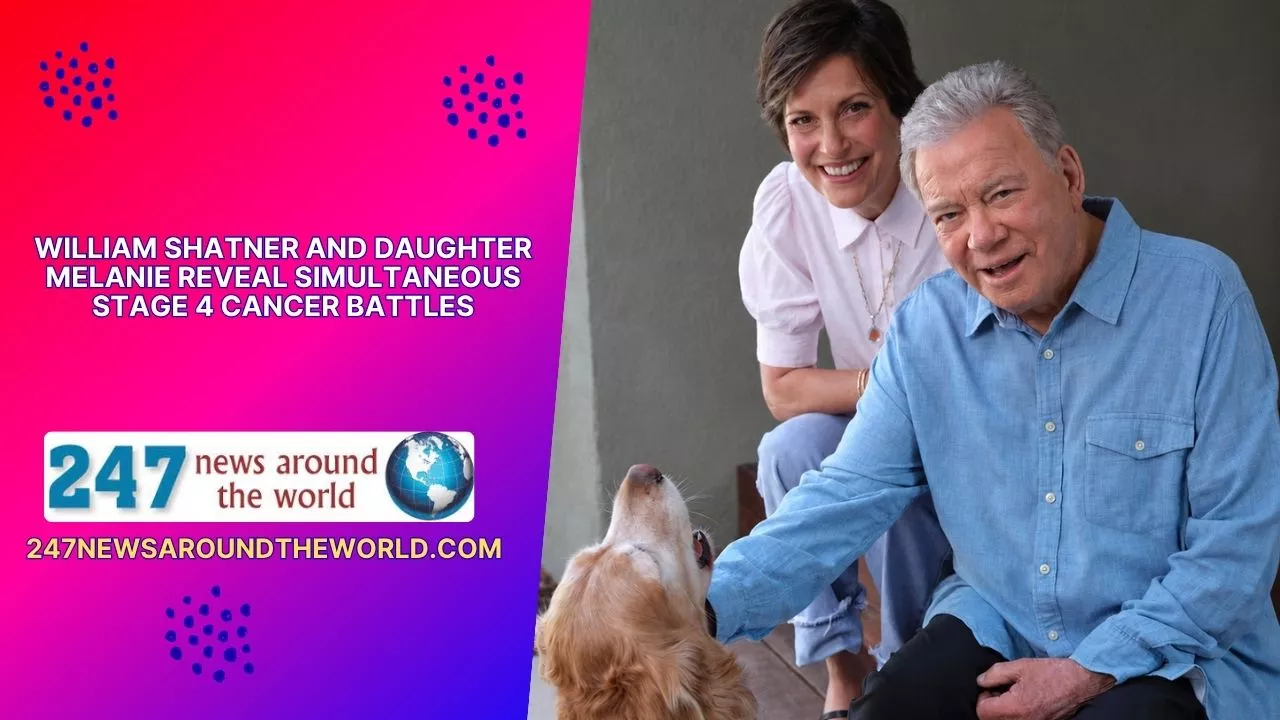

In July 2026, William Shatner shared a chapter of his life that he had kept largely private: the 95-year-old actor and his youngest daughter, Melanie Shatner Gretsch, both fought Stage 4 cancer at nearly the same time. The two spoke together in a People cover story published on July 22, describing how their overlapping diagnoses reshaped their family and their outlook on life.
This is not only a celebrity headline. It is a story about two aggressive, life-threatening cancers, two very different treatment paths, and an outcome that many patients hope for but do not always reach. Below is a clear, verified account of what happened, when it happened, how each cancer was treated, and why doctors described one of the diagnoses as an unusually treatable case. You will also find plain-language explanations of the medical terms involved, so the story makes sense whether or not you follow celebrity news.
What Happened
William Shatner and Melanie Shatner Gretsch revealed that they were both living with Stage 4 cancer during an overlapping period between 2022 and 2024. Melanie was diagnosed first, with metastatic breast cancer. Her father was diagnosed roughly a year later with malignant melanoma that had already spread to his lungs and brain.
At the time Shatner learned of his own diagnosis, Melanie was still finishing her treatment. In the People interview, she recalled a night when she feared she would not survive and called her father, who came to her immediately. Both were declared cancer-free by late 2024. They chose to tell the story publicly in 2026, ahead of the launch of a new podcast built around health, resilience, and living fully in the present.
The Full Timeline
Here is the sequence of events, drawn from the family’s own account in People and from surrounding reporting.
| Date | Event |
|---|---|
| July 2022 | Melanie Shatner Gretsch, then 60, feels a small lump on her breast at night, months after a clear mammogram. |
| Shortly after | She is diagnosed with Stage 4, HER2-positive breast cancer at UCLA Health. |
| 2022 to 2023 | Melanie undergoes roughly 18 months of treatment, including chemotherapy, a double mastectomy without reconstruction, and about 30 radiation sessions. |
| June 2023 | William Shatner, near the end of his daughter’s treatment, is diagnosed with Stage 4 malignant melanoma after a lump on his cheek is re-examined. |
| 2023 to 2024 | Shatner has surgery to remove the facial tumor, followed by roughly two years of immunotherapy targeting the cancer in his lungs and brain. |
| Late 2024 | Both father and daughter are declared cancer-free. |
| July 22, 2026 | The pair go public with their joint story in a People cover interview. |
| July 29, 2026 | Their podcast, No Time but Now, is scheduled to premiere. |
Melanie Shatner Gretsch’s Breast Cancer Journey
Melanie’s diagnosis began with a moment many people can relate to. She felt a small bump one night and initially assumed it was harmless. What makes her story medically notable is that she had received a clear mammogram only about five months earlier. That detail is a useful reminder that mammograms are powerful but not perfect, and that new physical changes are worth checking even after a recent all-clear.
She was diagnosed with HER2-positive breast cancer. HER2 is a protein that can drive faster tumor growth, but it is also a target for specialized modern drugs, which has changed the outlook for many HER2-positive patients over the past two decades. Her disease was classified as Stage 4, meaning it had spread beyond the breast.
Her treatment was intensive and spanned roughly 18 months. It included chemotherapy, a double mastectomy performed without reconstruction, and around 30 radiation treatments. According to earlier public interviews tied to UCLA Health, her care team viewed her as a rare case of Stage 4 breast cancer that could be treated with the goal of a cure, because the spread was limited rather than widespread. That distinction matters, and it is explained further in the medical context section below.
Don’t Miss | Elon Musk Announces Grok AI Will Create Historically Accurate Odyssey Movie
William Shatner’s Melanoma Diagnosis
Shatner’s cancer was caught almost by chance. A lump appeared on his cheek and was initially attributed to a blocked salivary gland, something generally considered harmless. A friend who is a plastic surgeon urged him to have it removed anyway. When it was examined, doctors determined it was Stage 4 malignant melanoma, and that it had already spread to his lungs and brain.
He underwent surgery to remove the facial tumor and then a course of immunotherapy that lasted roughly two years, aimed at the cancer that had reached his internal organs. Shatner has said his instinct was to stay calm and assume he would recover, an attitude his daughter noticed even while she was frightened for him.
This was not Shatner’s first serious health scare. In 2016 he faced a prostate cancer alarm that turned out to be a false reading linked to supplements he was taking at the time. His melanoma, by contrast, was real and advanced, which makes his recovery all the more striking given his age.
Understanding the Two Diagnoses (Medical Context)
Because both cancers were labeled Stage 4, it is worth explaining what that means and why the outcomes were still hopeful. This section is educational and general. It is not medical advice, and anyone with concerns about their own health should speak with a qualified clinician.
What Stage 4 means. Stage 4 is the most advanced stage, indicating that cancer has spread from where it started to distant parts of the body. For melanoma, that can mean spread to organs such as the lungs or brain.
For breast cancer, Stage 4 is also called metastatic breast cancer, meaning it has traveled beyond the breast and nearby lymph nodes.
Why survival is no longer a foregone conclusion. A generation ago, a Stage 4 melanoma diagnosis often carried a median survival measured in months. The arrival of immunotherapy, which helps the body’s own immune system attack cancer cells, has changed outcomes significantly for many melanoma patients over the past decade. Shatner’s roughly two-year immunotherapy course reflects that modern approach.
Why one case was called potentially curable. Not all Stage 4 cancers behave the same way. When metastatic disease is limited to only one or a few sites, sometimes called oligometastatic disease, doctors may occasionally treat it aggressively with the aim of long-term remission rather than only slowing it down. That framing helps explain why Melanie’s team reportedly saw her as an unusual case, and it is an important nuance for readers who might otherwise assume every Stage 4 diagnosis carries the same prognosis.
Why This Story Matters
Two things make this more than an ordinary celebrity update.
- Public figures reduce stigma. When well-known people describe cancer treatment honestly, including the parts that are physically and emotionally draining, it can encourage others to take symptoms seriously and to seek support.
- It highlights early action. Both diagnoses involved a lump that could easily have been dismissed. In both cases, a decision to get something checked, even after reassurance, changed the outcome. That is a practical takeaway readers can apply directly.
There is also a family dimension. Two immediate relatives facing advanced cancer at the same time is uncommon and emotionally heavy, and their account of leaning on each other gives the story a human center rather than a clinical one.
How the News Was Covered
The story was reported first through a People magazine cover interview and then picked up broadly by major entertainment and news outlets, including ABC News and Good Morning America, Fox News, E! Online, NewsNation, Rolling Stone, and others, all within roughly a day of the original publication. Coverage was consistent on the core facts: two Stage 4 diagnoses about a year apart, intensive treatment for both, and a cancer-free status reached by late 2024.
Rather than repeat unverified social media chatter, it is more useful to note the tone of the mainstream coverage, which was largely centered on survival, family support, and the pair’s decision to turn a difficult experience into a public project focused on health and longevity.
Los Angeles actors William Shatner, daughter survive stage 4 cancers
Actor William Shatner, 95, and his youngest daughter, Melanie Shatner Gretsch, 61, have disclosed that they underwent overlapping battles with separate stage 4 cancers beginning in mid-2022. Melanie was diag… pic.twitter.com/PyfBxYfLYd
— JQJO USA Entertainment English (@jqjousaenteng) July 22, 2026
William Shatner’s Career and Life in Context
Part of why this news traveled so widely is the sheer length and visibility of Shatner’s career. He became a global figure as Captain James T. Kirk in the original Star Trek series and its films. Decades later he won acclaim and Emmy recognition for playing Denny Crane on Boston Legal. He has remained unusually active into his nineties, including a 2021 Blue Origin space flight that briefly made him the oldest person to reach space, and a 2023 documentary about his life titled You Can Call Me Bill.
He has also spoken openly about hardship, including a period early in his career when money was so tight that he lived out of his car. That history gives weight to his comments about gratitude and perspective, and it frames the cancer story as one more chapter in a life marked by both setbacks and reinvention.
The Financial and Practical Side of Cancer
One of the more grounded moments in the family’s account touched on money. When Melanie worried about the financial strain that serious cancer treatment places on families, her father told her to send him the bills, according to People. It is a small detail, but it points to a real issue that affects most patients who are not wealthy.
For readers, the practical reminders embedded in this story are worth stating plainly:
- Follow up on physical changes even after a recent clean screening.
- Ask for a second opinion when something does not feel resolved, as both Shatners effectively did.
- Understand that Stage 4 is not a single prognosis. The extent and location of spread matter, and treatment options have expanded.
- Plan for the non-medical costs of treatment, including time, caregiving, and finances, which often go underdiscussed.
The Podcast and What Comes Next
Shatner and Melanie are channeling their experience into a weekly podcast called No Time but Now, presented by LifeWave and set to premiere on July 29, 2026. The series focuses on health, wellness, and longevity, featuring conversations with medical experts and fellow cancer survivors.
Reporting on the launch has named several planned guests, including Olympic figure skating champion Scott Hamilton, who is himself a cancer survivor, end-of-life advocate Alua Arthur, physician and author Dr. Gabor Maté, and author Anita Moorjani. The premise is straightforward: use hard-earned experience to help others think about how they want to live, especially after a health crisis.
Separately, Shatner has continued his pattern of unexpected creative projects, including work on new music, underscoring a public persona built around staying active rather than slowing down.
Interesting Facts
- The two diagnoses came roughly 11 months apart, with Melanie diagnosed first in 2022 and William in June 2023.
- Shatner’s melanoma had already spread to two organs, his lungs and brain, by the time it was identified.
- Melanie’s care was handled through UCLA Health, and her team reportedly considered her a rare potentially curable Stage 4 breast cancer case.
- Shatner has three daughters, Leslie, Lisbeth, and Melanie, from his marriage to Gloria Rand.
- Both were declared cancer-free in late 2024, but chose to share the story publicly only in 2026.
Frequently Asked Questions
What kind of cancer did William Shatner have?
He was diagnosed with Stage 4 malignant melanoma in June 2023, a skin cancer that had spread to his lungs and brain. He was treated with surgery and about two years of immunotherapy.
What kind of cancer did Melanie Shatner Gretsch have?
She was diagnosed with Stage 4, HER2-positive breast cancer in 2022. Her treatment included chemotherapy, a double mastectomy, and around 30 radiation sessions.
Are William Shatner and his daughter cancer-free now?
Yes. According to their own account in People and multiple news reports, both were declared cancer-free by late 2024.
Did they have cancer at the same time?
Their treatment periods overlapped. Melanie was diagnosed first and was still in treatment when her father received his diagnosis about a year later.
How old are they?
William Shatner is 95, and Melanie Shatner Gretsch is 61.
What is the No Time but Now podcast?
It is a weekly health, wellness, and longevity podcast hosted by the father and daughter, premiering July 29, 2026, featuring interviews with health experts and cancer survivors.
Why is a Stage 4 diagnosis not always fatal?
Outcomes depend on the cancer type, how far it has spread, and available treatments. Advances such as immunotherapy for melanoma and targeted therapy for HER2-positive breast cancer have improved survival for many patients.
Also Read | Texas Sisters Cookie and Kitty Charged in Mom of 5 St@bbing Death
Last Updated on July 23, 2026 by 247 News Around The World