
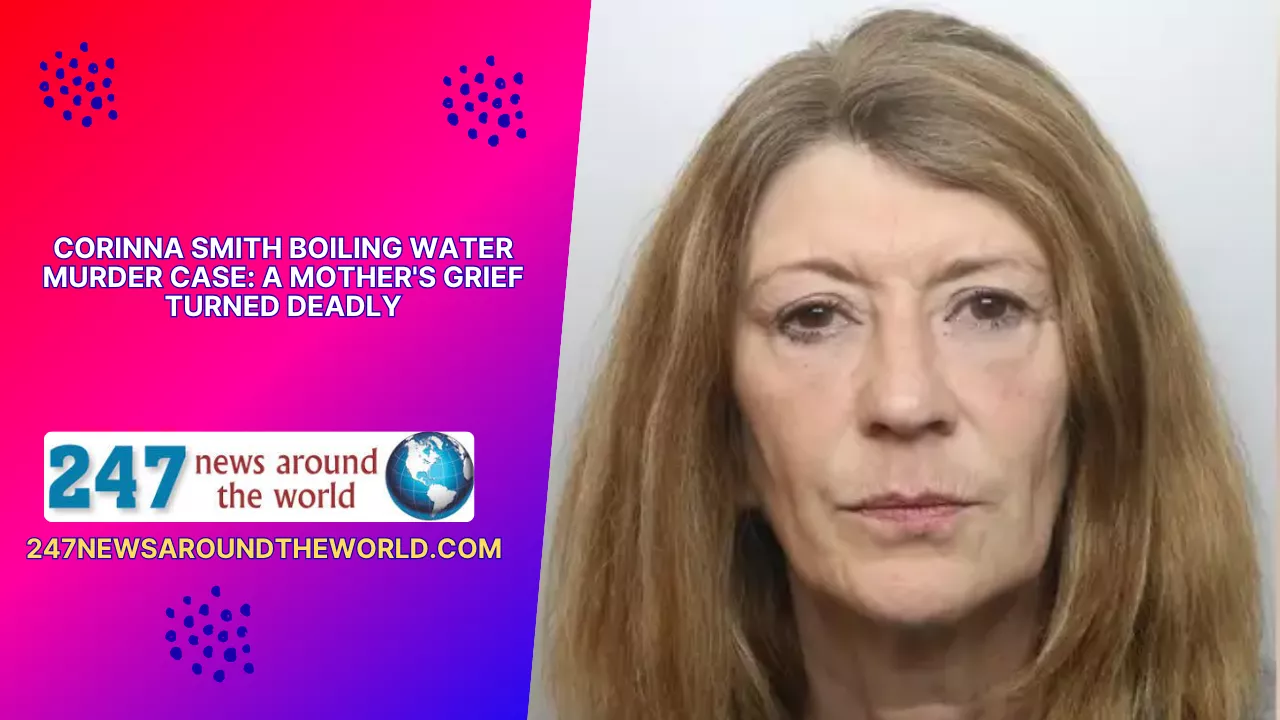

The Corinna Smith boiling water murder case is one of the most disturbing domestic killings to reach a British courtroom in recent years. It is a story with no comfortable side. A wife and long-term carer took the life of her elderly husband in a slow, agonising way. She did so after being told he had sexually abused her children, a claim she believed but that a court was never able to test.
This article sets out what actually happened, who the people involved were, why the jury rejected her defence, and what the sentencing judge concluded. It draws on reporting from the BBC, statements from the Crown Prosecution Service and Cheshire Constabulary, and the official sentencing remarks published by the judiciary. The aim is to give you the complete, accurate picture in one place, including the parts that make this case morally and legally complicated.
A note before we begin: the allegations of abuse against the victim were never proven. They were not tested at trial, no charges were ever brought against him, and he was entitled to the presumption of innocence. Keeping that distinction clear is essential to understanding the case fairly.
What Happened: The Night of the Attack
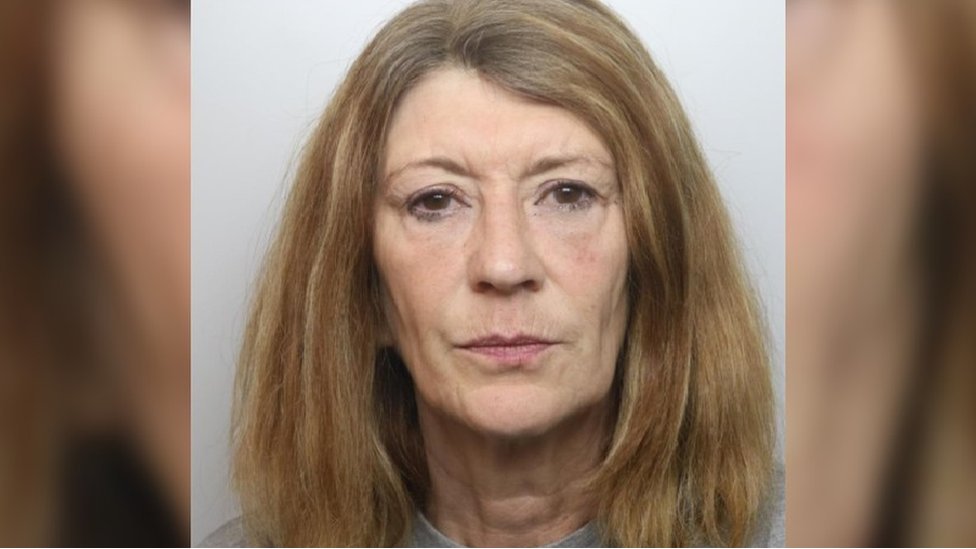
In the early hours of 14 July 2020, at a home on Highfield Road in Neston, Cheshire, 81-year-old Michael Baines was asleep in a downstairs bedroom. His wife of 38 years, Corinna Smith, then 59, went to the kitchen, boiled a kettle twice, and mixed the water with sugar in a bucket taken from the garden. She then poured the scalding mixture over his arms and torso as he slept.
In 2021, Corinna Smith found out that her husband, Micheal Baines had sexually assaulted her children when they were younger. Following the disturbing discovery, she filled a garden bucket with boiling water and three bags of sugar before hurling it over Michael Baines as he… pic.twitter.com/ail9lXwq2K
— Creepy.org (@creepydotorg) February 19, 2025
Smith left the house and ran several doors down to a neighbour, telling him she had badly hurt her husband and thought she had killed him. The neighbour called emergency services. Officers and paramedics found Baines in severe pain with extensive burns.
He had burns across 36% of his body. Michael was taken to the burns unit at Whiston Hospital, where he remained for a period before his condition deteriorated. He died in hospital in August 2020, roughly five weeks after the attack.
The detail that made the case so shocking was the sugar. Investigators explained that adding sugar thickens boiling water, making it cling to skin instead of running off. That increases the depth and severity of the burns. Prosecutors argued this was not incidental. It pointed, they said, to an intention to cause maximum suffering.
Who Were Corinna Smith and Michael Baines?
Corinna Smith, also known as Corinna Baines, had married Michael Baines when she was 21. By the time of his death she was 59 and he was in his early eighties. Both had been married before and each had children from those earlier relationships. Together they had one son, Craig.
The court heard that the marriage had generally been a happy one, though the age gap became more noticeable in later years. Smith said her husband could be controlling at times, but described a relationship she had tolerated and one in which she still loved him. Friends and family saw them as an ordinary couple.
Crucially, Smith was also her husband’s carer. He was elderly, not in the best of health, and dependent on her. That caregiving relationship later became one of the aggravating features the sentencing judge weighed, because it underlined how vulnerable he was.
Smith had no previous convictions. The court was told she had led an otherwise blameless life and had done charity work. This was, by every account, a woman with no history of violence.
The Allegations That Preceded the Attack
What Smith was told
On 13 July 2020, the day before the attack, Smith spent the day with her daughter. During that visit, her daughter disclosed that Michael Baines had sexually abused her and her brother Craig over many years when they were children. The daughter was distressed and gave only limited detail, saying the truth was too much to fully describe.
Smith was, in the words used at trial, livid and in shock. Her first instinct was to call the police. Her daughter asked her not to do so straight away, worried about splitting the family, and suggested taking a polygraph test to prove the account first.
A polygraph appointment was actually booked that evening, with Smith paying an advance fee. She made a series of highly emotional phone calls to her son, her daughter and a cousin. Less than an hour after the last of those calls, she carried out the attack.
The connection to her son’s death
The allegations struck a devastating nerve because of what had happened to Craig. Smith’s son had taken his own life in 2007, in his mid-twenties. He had been troubled, and had previously been imprisoned for a serious assault.
The court heard that Craig had told his mother the man he attacked was a paedophile who had abused him, and that shortly before his death he had said words to that effect again. At the time, Smith did not press him on it. She had blamed herself for his death ever since, though the judge later told her plainly that she bore no fault for it.
When her daughter’s disclosure came, Smith connected it in her mind to Craig’s earlier words and to his suicide. In her belief, the abuse allegations explained her son’s death. That connection is central to understanding her state of mind, even though it does not excuse what followed.
Timeline of the Corinna Smith Case
| Date | Event |
|---|---|
| 2007 | Smith’s son Craig dies by suicide in his mid-twenties |
| 13 July 2020 | Smith’s daughter discloses abuse allegations against Michael Baines |
| Late 13 July 2020 | Series of emotional family phone calls; polygraph booked |
| Early hours, 14 July 2020 | Smith pours boiling sugar water over her sleeping husband |
| 14 July 2020 | Baines admitted to Whiston Hospital with 36% burns |
| August 2020 | Michael Baines dies in hospital from his injuries |
| June 2021 | Five-day trial at Chester Crown Court |
| 15 June 2021 | Jury finds Smith guilty of murder |
| 9 July 2021 | Smith sentenced to life, minimum term of 12 years |
The Trial: Murder or Manslaughter?
The legal heart of the case was not who caused the burns. Smith never denied that. The question was whether it was murder or manslaughter.
Her defence team, led by Mary Loram QC, argued for manslaughter by reason of loss of control. Under English law, that partial defence can reduce murder to manslaughter if a defendant killed after losing self-control because of a qualifying trigger, and if a person of ordinary tolerance might have reacted similarly. The defence said the sudden, shocking revelations about her children had pushed Smith past that point.
The prosecution, led by Mark Ryan QC, rejected that framing. They argued her actions were deliberate and considered. Preparing the mixture, boiling the kettle twice, adding the sugar and carrying the bucket to the bedroom took time, expert evidence suggested around 13 minutes. That, prosecutors said, was not a person who had lost control. It was someone acting with purpose to punish.
The jury agreed with the prosecution. After a five-day trial at Chester Crown Court, they found Corinna Smith guilty of murder. Their verdict meant they were not satisfied she had genuinely lost control in the legal sense.
Also Read | Savannah Guthrie Begs Kidnappers in Emotional Plea for Missing Mother Nancy
The Sentencing: What the Judge Concluded
At sentencing on 9 July 2021, Mrs Justice Amanda Yip delivered remarks that carefully balanced sympathy against condemnation.
She accepted several points in Smith’s favour. She sentenced on the basis that Smith had intended to cause serious harm rather than to kill, and that this intention formed while she was in acute distress rather than as part of a long-held plan. Mrs Justice Amanda Yip accepted Smith was in an acute stress state and had shown symptoms of post-traumatic stress. She noted Smith’s clean record, good character and charity work, and described the crime as out of character.
Against that, the judge identified clear aggravating factors. The victim was elderly, vulnerable, asleep and unable to defend himself, and Smith was his carer. The method involved planning and sustained action and was designed to cause significant suffering, which it did.
The judge made a point that lifts the case beyond a single family tragedy. By killing Baines, Smith removed any chance for the allegations to be tested. She emphasised that everyone is entitled to the presumption of innocence, and that the killing took away his right to answer the claims, and took away the family’s chance to establish the truth. The allegations, she said, were left hanging and unproven.
The mandatory sentence for murder is life imprisonment. From a starting point of 15 years, the judge made a significant downward adjustment to reflect the impact of the revelations on Smith, setting the minimum term at 12 years, less time already served on remand and on a qualifying curfew.
Why the Case Matters
It tests the limits of the loss of control defence
This case is now frequently cited in discussions of when extreme provocation does and does not reduce murder to manslaughter. The jury’s decision underlines a hard principle in English law: even genuine, overwhelming distress does not automatically excuse a killing, especially where there is evidence of planning and a gap between the trigger and the act.
It highlights the danger of untested allegations
The judge’s warning about the presumption of innocence resonated widely. Whatever people believed about Michael Baines, the law never had the chance to examine the claims. He died without answering them, and his own children were left to carry grief compounded by unresolved questions. The case is a stark example of why justice depends on due process, not private punishment.
It reflects the weight of unresolved grief
Smith’s belief that abuse explained her son’s suicide shaped everything. Whether or not the allegations were true, the case shows how buried grief and guilt, left unaddressed for years, can resurface with catastrophic force. Her own surviving son reportedly described her actions as very wrong but an emotional reaction to devastating information, a summary the judge said she could not improve upon.
Public and Media Reaction
The case drew national coverage in the United Kingdom and international pickup in the United States and beyond, largely because of the unusual and gruesome method. Cheshire Constabulary described the killing as horrific and cruel, stressing how the sugar was used to worsen the injuries.
The Crown Prosecution Service characterised the attack as brutal and painful, and defended its decision not to accept a manslaughter plea. Officers publicly extended sympathy to Baines’s children.
In the years since, the case has resurfaced through true-crime podcasts and long-form retellings, which have reintroduced it to a global audience and reignited debate. Much of that debate centres on a single uncomfortable question: how much should shocking revelations reduce moral or legal responsibility for a killing? Reasonable people continue to disagree, which is part of why the case endures.
Where Is Corinna Smith Now?
Corinna Smith is serving a life sentence in the UK prison system. Her minimum term of 12 years began in 2021, with credit for time already spent in custody and on a qualifying curfew.
A minimum term is not a release date. Once it has been served, it will be for the Parole Board to decide whether she is safe to release. Even if released, she will remain on licence for the rest of her life and can be recalled to prison. Based on the credit applied at sentencing, she becomes eligible to be considered for parole in the early 2030s, though eligibility is not a guarantee of release.
Key Facts at a Glance
- Defendant: Corinna Smith, also known as Corinna Baines
- Victim: Michael Baines, her husband of 38 years
- Location: Highfield Road, Neston, Cheshire
- Date of attack: 14 July 2020
- Injuries: Burns to 36% of the body from boiling sugar water
- Verdict: Guilty of murder, Chester Crown Court, June 2021
- Sentence: Life imprisonment, minimum term of 12 years
- Judge: Mrs Justice Amanda Yip
- Key legal issue: Rejected defence of loss of control
Frequently Asked Questions
What did Corinna Smith do?
She murdered her elderly husband, Michael Baines, by pouring a mixture of boiling water and sugar over him while he slept at their home in Neston, Cheshire, in July 2020. He died from his injuries weeks later.
Why did Corinna Smith attack her husband?
The day before the attack, her daughter told her that Baines had sexually abused her and her late brother as children. Smith believed the claims and connected them to her son’s suicide. She acted in what the court accepted was acute distress, though the jury found it was murder, not a loss of control.
Were the abuse allegations against Michael Baines proven?
No. The allegations were never tested in court. No charges were brought and he was never convicted. The sentencing judge stressed that he remained entitled to the presumption of innocence and that his killing removed any chance to establish the truth.
Why was it murder and not manslaughter?
Her defence argued loss of control, which can reduce murder to manslaughter. The jury rejected it. Prosecutors showed that preparing the mixture took time and involved deliberate steps, which pointed to a considered act rather than a sudden loss of self-control.
What sentence did Corinna Smith receive?
Life imprisonment with a minimum term of 12 years, reduced from a higher starting point to reflect the shocking revelations she had received. She must serve the minimum term before the Parole Board can consider release.
Why did the sugar make the attack worse?
Adding sugar to boiling water makes it thicker and stickier so it clings to skin rather than running off, deepening the burns. Prosecutors treated this as evidence of an intent to cause serious harm.
Is Corinna Smith still in prison?
Yes. She is serving her life sentence and will not be considered for release until her minimum term has passed, and only if the Parole Board decides she is safe to release.
Also Read | Meet Alisyn Camerota Family and Husband Tim Lewis with Their 3 Children
Last Updated on July 29, 2026 by 247 News Around The World