
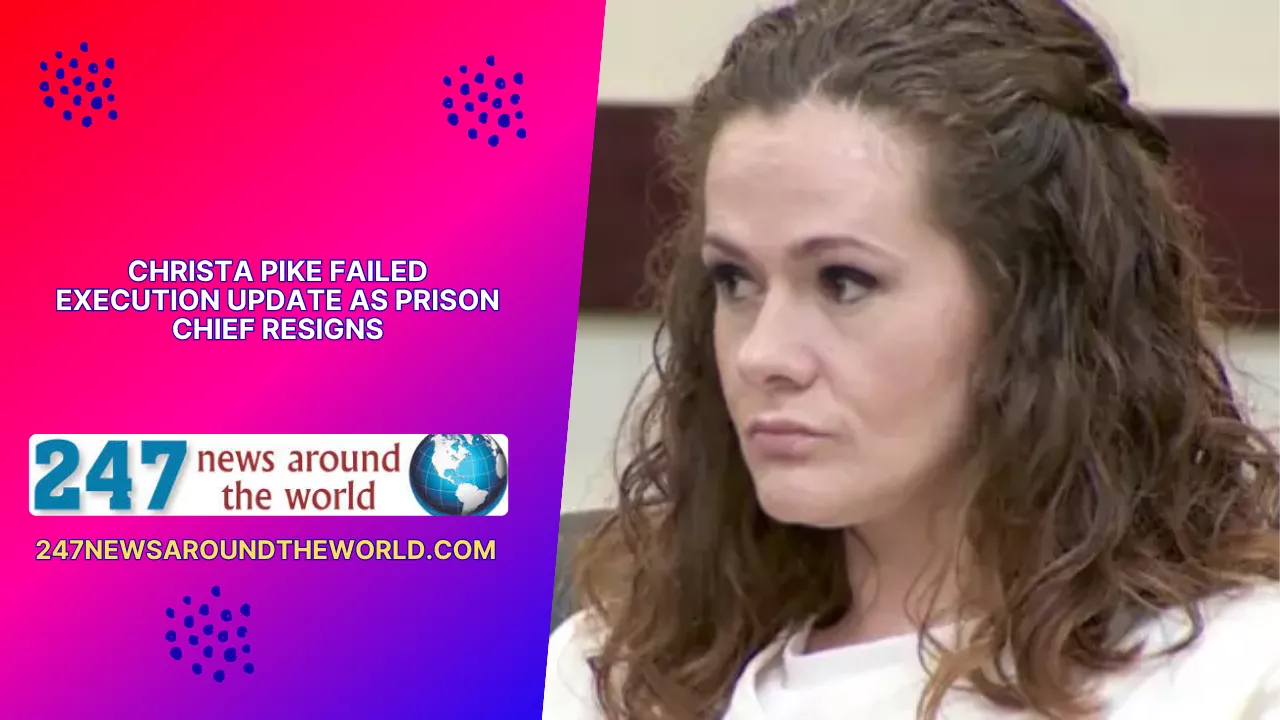

Christa Pike was supposed to die on September 30, 2026. She did not. Tennessee’s attempt to execute her by lethal injection failed after two doses of pentobarbital left her unconscious but alive, snoring on the gurney while the execution chamber’s microphone was eventually cut off.
Three days later, on October 3, Tennessee Department of Correction Commissioner Frank Strada resigned. Governor Bill Lee accepted the resignation, announced an independent review led by former U.S. Attorney Ed Stanton, and halted all scheduled executions in the state.
As of October 5, 2026, Pike remains on a ventilator in a guarded hospital room in Nashville. She has not regained consciousness. Her attorney, Stephen Ferrell, has said she may never fully recover. Hospital staff are still working to flush the pentobarbital from her system. Both of her arms are swollen, burned, and blistered from the failed IV lines.
The case has drawn national attention and reignited the debate over lethal injection as a method of execution. President Trump weighed in, telling reporters that a failed execution “shouldn’t be very difficult.” Tennessee Republicans, including Senator Marsha Blackburn, called for Strada’s departure before the resignation was formally announced.
Pike is 50 years old. She was convicted in 1996 of the first-degree murder of 19-year-old Colleen Slemmer, a fellow Knoxville Job Corps student killed in 1995. If the execution had succeeded, Pike would have been the first woman put to death in Tennessee in more than 200 years.
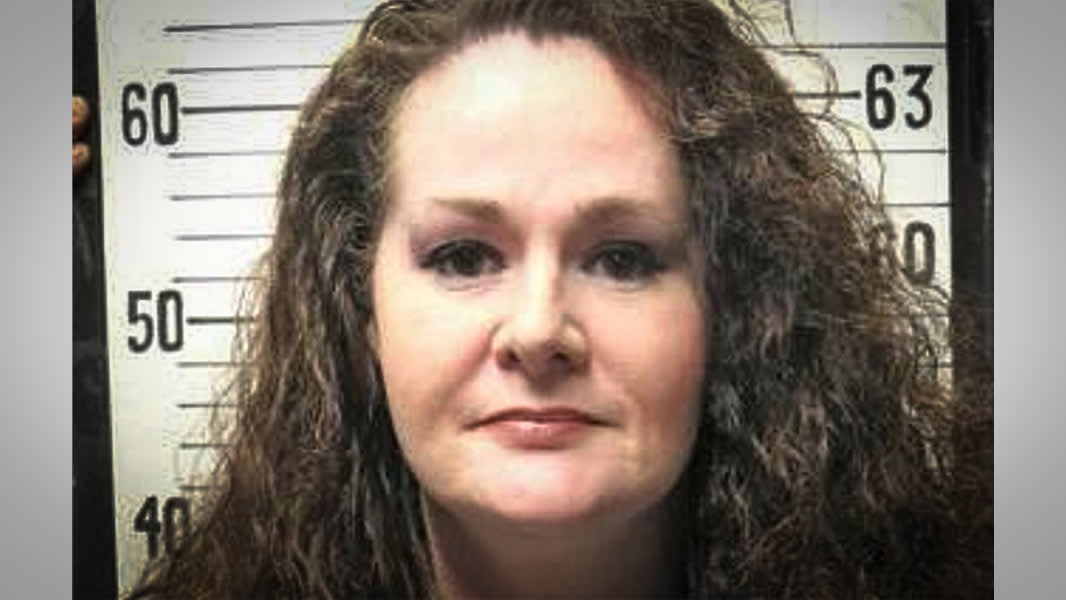
Christa Pike Failed Execution Update: What Happened in the Death Chamber
The execution was scheduled for the evening of September 30, 2026, at Riverbend Maximum Security Institution in Nashville. Tennessee’s lethal injection protocol calls for two 50-milliliter syringes of pentobarbital, a barbiturate used to suppress the central nervous system and stop breathing.
Pike’s attorneys had warned the state in advance that the execution would go wrong. They cited a blood condition that would make it harder to place IV lines. The state moved forward anyway, after Governor Lee rejected a clemency petition seeking to commute her death sentence to life without parole.
According to witness accounts and court filings from Pike’s attorneys, this is what happened inside the execution chamber:
- The execution team spent approximately one hour attempting to administer the lethal drugs.
- Pike received the first dose of pentobarbital. She did not die. Witnesses reported that she remained conscious.
- A second dose was administered. Pike still did not die. Witnesses said she was snoring audibly.
- Pike’s attorneys allege that the IV lines were improperly placed. They say the pentobarbital flowed into her body tissue instead of her bloodstream. At no point, they allege, did the execution team realize the lines were misplaced or that the veins had blown.
- Instead of correcting the IV placement, the team prepared and administered the second dose through the same compromised lines.
- The execution chamber’s microphone was eventually cut off, with Pike still alive and snoring more than an hour into the attempt.
- Pike was transported by ambulance to a Nashville-area hospital.
Her legal team said in a statement that night: “We take no pleasure in being right, but the concerns raised by Ms. Pike proved to be true: difficult vein access, blown veins, degraded pentobarbital, no emergency medical care available when things inevitably go wrong, all under a protocol that remains veiled in secrecy.”
Also Read: Chris Brown Death Threat Claims Emerge in Diamond Brown Custody War
Pike’s Current Condition: Ventilator, Burns, and an Uncertain Prognosis
Court filings from Pike’s attorneys provided the first detailed account of her condition after the failed execution.
Christa Pike still unconscious, on ventilator after botched execution.
Exclusive: https://t.co/a5SjZtd4C4 https://t.co/HbrueCVFhU
— TMZ (@TMZ) October 2, 2026
As of Thursday night, October 2, Pike was unconscious and intubated. She was breathing through a ventilator. Hospital staff were working to save her life and clear the pentobarbital from her system.
Both of her arms were “swollen, burned, and blistered” upon her arrival at the hospital, according to the filing. Pentobarbital is known to cause tissue damage, including chemical burns, when it leaks outside the veins into surrounding tissue. Pike’s attorneys believe that is exactly what happened.
Her attorney, Stephen Ferrell, told CNN on October 5 that Pike’s condition “remains the same” and that doctors are still trying to determine the extent of the damage. He said Pike may never fully recover. If she does regain consciousness, Ferrell added, there could be questions about her mental competence going forward.
Pike’s hospital room is under guard. Visitors are extremely limited.
Ferrell also said that doctors are “baffled” as to how Pike survived two full doses of the drug.
Prison Commissioner Frank Strada Resigns
On October 3, 2026, Governor Bill Lee announced that Correction Commissioner Frank Strada had submitted his resignation. Strada said stepping down was “in the best interests of Tennesseans” while the independent review takes place.
Strada will formally leave his position by the end of October.
The resignation came under mounting pressure. Several Tennessee Republicans, including Senator Marsha Blackburn, the party’s candidate for governor, had publicly stated that Strada should step down or be replaced. Governor Lee had previously avoided directly addressing whether Strada’s job was at risk, instead echoing Strada’s own defense of how the department handled lethal injections.
Strada’s background added a layer to the scrutiny. Court filings show that his career included overseeing executions in Arizona when they resumed in 2022 after an eight-year pause. Some of those Arizona executions also had documented problems.
Pike’s legal team responded to the resignation by saying it “does nothing to help Christa now.”
Governor Lee Halts Executions and Orders Independent Review
In addition to accepting Strada’s resignation, Governor Lee took two immediate steps:
He halted all scheduled executions in Tennessee pending the outcome of the review. Gary Wayne Sutton, who was scheduled to be executed on December 3, 2026, is the next inmate directly affected by the pause.
He appointed former U.S. Attorney Ed Stanton to lead an independent review of what went wrong during Pike’s execution. The scope of the review has not been publicly detailed, but it is expected to cover the execution protocol, the IV placement, the condition of the drugs used, and the decision to proceed despite Pike’s known medical conditions.
This is the second time in recent years that Tennessee has paused executions. In 2022, Governor Lee halted executions after an investigation revealed that prison officials had been breaking their own lethal injection rules. Executions resumed under a new single-drug protocol using pentobarbital, which replaced the previous three-drug method.
The failed execution of Christa Pike, which one death penalty expert described as unprecedented, led Republican Gov. Bill Lee to order a review, calling what happened “deeply disturbing” on Thursday and indefinitely postponing Pike’s execution and another one that had been scheduled for this year.
— The Associated Press (@AP) October 2, 2026
Tennessee’s Second Failed Execution in 2026
Pike’s botched execution is not an isolated incident in Tennessee this year. In May 2026, the state stopped the execution of death row inmate Tony Carruthers after staff successfully placed an IV into his right arm but could not establish a secondary IV line. The execution was called off, and Governor Lee issued a one-year stay.
Two failed executions in the same calendar year raised questions about whether Tennessee’s execution infrastructure is capable of carrying out the process reliably.
Pike’s attorneys pointed to the pattern. In their court filing, they characterized the failures as evidence that the state’s protocol is fundamentally flawed, arguing that the secrecy surrounding drug sourcing, medical qualifications of the execution team, and the absence of emergency medical care within the execution chamber all contribute to outcomes like the one on September 30.
Republican lawmakers in Tennessee have responded by calling for a review of whether to abandon single-drug lethal injection in favor of other methods for carrying out death sentences.
The Crime: The 1995 Murder of Colleen Slemmer
Christa Gail Pike was born on March 10, 1976, in Beckley, West Virginia. Her childhood was defined by instability and abuse. She was sexually assaulted multiple times as a child, first by her grandmother’s boyfriend and later by one of her mother’s partners. She attempted to overdose on acetaminophen in third grade. Her mother’s relationships were unstable, and Pike changed schools frequently.
At 18, Pike enrolled in the Knoxville Job Corps Center in Tennessee, a federally supported program designed to provide vocational training and education to young adults. She hoped to become a nurse.
There, she began a relationship with 17-year-old Tadaryl Shipp. The relationship was volatile. Pike became jealous of 19-year-old Colleen Slemmer, a fellow Job Corps student from Orange Park, Florida, who was studying computers. Pike believed Slemmer was trying to pursue Shipp.
On the evening of January 12, 1995, Pike, Shipp, and a friend named Shadolla Peterson lured Slemmer to an isolated steam plant near the University of Tennessee’s agricultural campus. What followed was a prolonged attack lasting at least 30 minutes.
According to court records and Pike’s recorded confession, Pike cut Slemmer with a box cutter, struck her repeatedly, and carved a pentagram into her chest. Slemmer’s skull was fractured. Pike kept a piece of Slemmer’s skull and showed it to classmates at Job Corps the next morning.
Police arrested Pike and Shipp on January 14, 1995, after a tip from another Job Corps student. The Knoxville Job Corps Center later closed permanently following community concerns stemming from the crime.
Conviction, Sentence, and Decades on Death Row
A jury convicted Pike of first-degree murder and conspiracy to commit first-degree murder in March 1996. She was sentenced to death. She was 20 years old at the time of sentencing and became one of the youngest people on death row in the United States.
Her co-defendants received lesser punishments:
| Person | Role | Sentence |
|---|---|---|
| Christa Pike | Primary attacker; convicted of first-degree murder and conspiracy | Death |
| Tadaryl Shipp | Participated in the attack; 17 at the time | 25 years to life (as a juvenile, ineligible for death penalty) |
| Shadolla Peterson | Present during the attack; cooperated with prosecutors | Probation (testified against Pike) |
Pike has been incarcerated since 1996, spending the past three decades at the Debra K. Johnson Rehabilitation Center (formerly the Tennessee Prison for Women).
In 2004, Pike was convicted of attempted murder after she tried to strangle a fellow inmate during a prison fight. That conviction added 25 years to her sentence.
Her attorneys have pursued appeals and post-conviction relief for years, arguing that her original defense team failed to present mitigating evidence about her childhood trauma, sexual abuse, and diagnoses of bipolar disorder and post-traumatic stress disorder.
The Tennessee Supreme Court set her execution date for September 30, 2026. Governor Lee rejected a clemency petition before the execution.
The Legal and Political Fallout
The failed execution has set off a chain of consequences that extends well beyond Pike’s case:
- Evidence preservation: Pike’s attorneys filed an emergency motion to preserve all evidence from the failed execution attempt. A court granted an expedited hearing.
- Execution pause: All scheduled executions in Tennessee have been halted until the independent review is completed.
- Political pressure: Multiple Tennessee Republicans have called for changes to the execution protocol. Some have suggested abandoning lethal injection in favor of alternative methods.
- National attention: The case has drawn coverage from major outlets including PBS, CNN, The Washington Post, NBC News, and Al Jazeera. It has become a reference point in the ongoing national debate over capital punishment.
- Potential second attempt: If Pike recovers, a central legal question will be whether the state can attempt to execute her again. Her attorney has said that if she does regain consciousness, there may be questions about her competence. Tennessee law does not explicitly address what happens when an execution fails but the inmate survives.
Frequently Asked Questions
What happened during Christa Pike’s execution?
On September 30, 2026, Tennessee attempted to execute Pike by lethal injection at Riverbend Maximum Security Institution. She received two doses of pentobarbital, but neither killed her. Her attorneys allege the IV lines were improperly placed, causing the drug to enter her body tissue instead of her bloodstream. She was transported to a hospital alive and placed on a ventilator.
What is Christa Pike’s current condition?
As of October 5, 2026, Pike remains unconscious, intubated, and on a ventilator at a Nashville-area hospital. Both of her arms are swollen, burned, and blistered. Her attorney has said she may never fully recover and that doctors are still working to clear the pentobarbital from her system.
Why did Tennessee’s prison chief resign?
Correction Commissioner Frank Strada resigned on October 3, 2026, three days after the failed execution. He said stepping down was “in the best interests of Tennesseans.” Multiple Tennessee Republicans, including Senator Marsha Blackburn, had called for his departure. Governor Bill Lee accepted the resignation and appointed former U.S. Attorney Ed Stanton to lead an independent review.
What crime was Christa Pike convicted of?
Pike was convicted of the first-degree murder and conspiracy to commit first-degree murder of Colleen Slemmer, a 19-year-old Knoxville Job Corps student. The murder took place on January 12, 1995. Pike was 18 at the time. She was sentenced to death in March 1996.
Can Tennessee try to execute Christa Pike again?
That question has not been formally answered. If Pike recovers and regains consciousness, the state would face legal and ethical questions about whether a second execution attempt is permissible. Her attorney has noted that even if she does wake up, her mental competence may be in question. Tennessee law does not explicitly address this scenario.
Has Tennessee had other failed executions?
Yes. In May 2026, the state stopped the execution of Tony Carruthers after staff could not establish a secondary IV line. Governor Lee issued a one-year stay for that execution. Pike’s botched execution is the second failure in the state in 2026.
Also Read: Tom Brady Reveals What Caused Fox Sports Audio Blunder
Last Updated on October 5, 2026 by 247 News Around The World