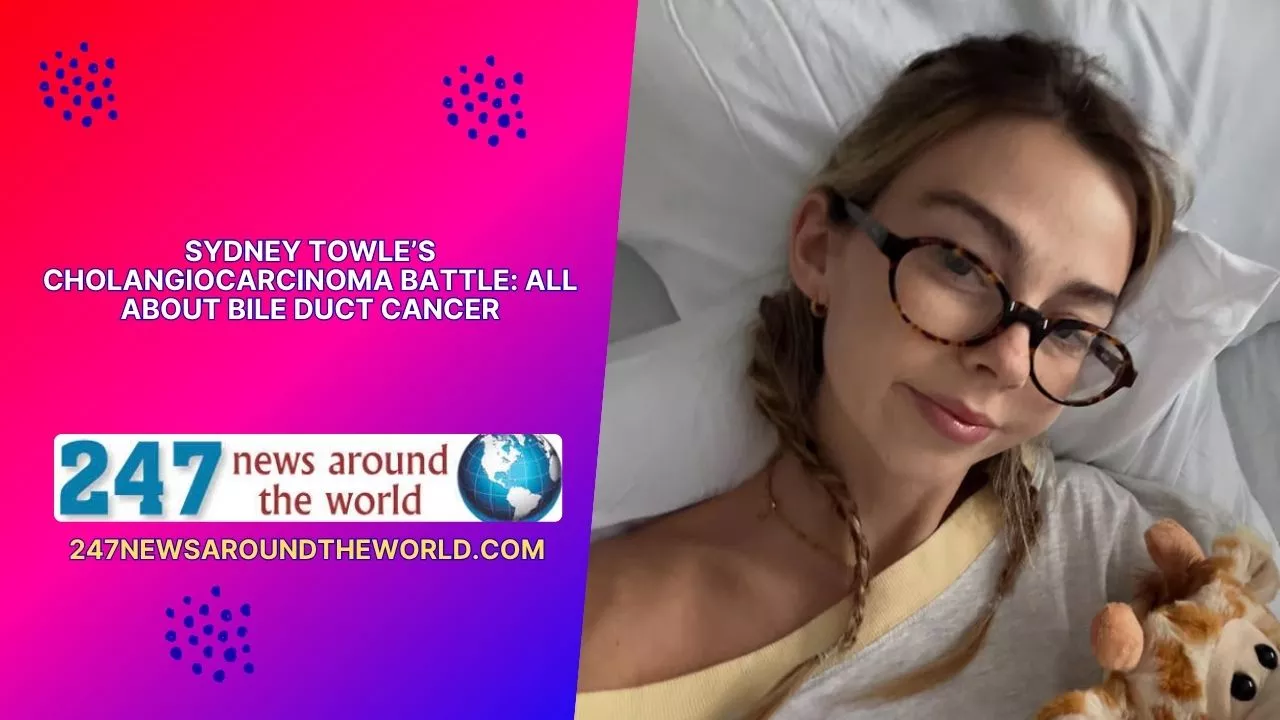

Sydney Towle, the TikToker who spent three years documenting her life with cholangiocarcinoma for more than 1.1 million followers, died on August 5, 2026. She was 26 years old.
Her family confirmed the news on her social media accounts on August 6, sharing a photograph of Towle standing on a mountain peak bathed in sunlight. The accompanying message was brief and full of grief: “We will always love you so much Sydney. I am so proud of how hard you fought. I love you.”
The day before her death, Towle’s brother Austin had posted a photograph of their family gathered around her hospital bed and announced she had entered hospice care. “Sydney has been moved to hospice and is surrounded by her friends and family,” he wrote. “Your love and support does not go unnoticed.”
For millions of people who followed her journey from that first tearful TikTok announcement in August 2023 to her final post on July 29, 2026, Towle was far more than a social media personality. She was a young woman who refused to let a devastating diagnosis define her entire existence, and in doing so, became one of the most visible advocates for cholangiocarcinoma awareness the world has ever seen.
Her story also raised an uncomfortable but important question: Why is a cancer that overwhelmingly affects people in their 70s increasingly showing up in patients decades younger?

Who Was Sydney Towle?
Sydney Elizabeth Towle was born on November 15, 1999, in New Hampshire. She attended Dartmouth College, where she studied government and environmental studies, and graduated as a young woman with the kind of future that seemed to stretch out endlessly before her. She earned her yoga certification, took up running, and was healthy by every measure she or anyone around her knew to check.
After graduation, Towle moved to Los Angeles, where she worked a remote marketing job, surfed, and built a social media presence posting lifestyle content, bikini selfies, and dance-trend videos. By any standard, she was a typical twentysomething navigating the early post-college years.
That changed in May 2023. During a routine run, Towle noticed a large bump protruding from her abdomen. She did what most people her age would do: she Googled it. The search results pointed to an exercise-induced hernia, and she began looking into treatment options. But soon after, a burning sensation in her stomach began during light activity and worsened over the following weeks.
“It got to the point where I couldn’t even go on walks anymore,” she later told People magazine.
Out of caution, Towle visited an urgent care clinic. The doctor agreed the bump could be a hernia but ordered an ultrasound. That scan revealed a solid mass. A follow-up MRI showed multiple masses in her liver and bile duct, including one that was significant in size. Further evaluation led to the diagnosis that would reshape the rest of her life: cholangiocarcinoma, a rare and aggressive form of bile duct cancer.
She was 23 years old.
Sydney Towle, the TikTok creator who inspired more than a million followers by candidly documenting her battle with a rare form of bile duct cancer, has died at age 26. Diagnosed with cholangiocarcinoma at just 23, she spent the past three years sharing her treatment journey with… pic.twitter.com/JVZ0iTSVMX
— HELLO! Canada (@HelloCanada) August 6, 2026
What Is Cholangiocarcinoma?
Cholangiocarcinoma is a cancer that forms in the bile ducts, the thin tubes that connect the liver, gallbladder, and small intestine. These ducts carry bile, a digestive fluid produced by the liver, to the small intestine, where it helps break down fats. When cancerous cells develop in the lining of these ducts, the result is one of the most difficult cancers to detect and treat.
Where It Develops
There are three types of cholangiocarcinoma, classified by where the tumor originates within the biliary system:
Intrahepatic cholangiocarcinoma forms inside the liver, within the smaller bile ducts. This type accounts for the majority of cases and has been increasing in incidence over the past several decades. The overall five-year relative survival rate for intrahepatic bile duct cancer in the United States is approximately 10%, according to data from the SEER (Surveillance, Epidemiology, and End Results) program.
Perihilar cholangiocarcinoma (also called Klatskin tumor) develops at the junction where the left and right hepatic bile ducts exit the liver. It is the most common subtype overall and tends to cause symptoms earlier than intrahepatic forms because it can obstruct bile flow more readily.
Distal cholangiocarcinoma occurs in the portion of the bile duct closest to the small intestine. The overall five-year survival rate for extrahepatic bile duct cancer is around 13%.
How Common Is It?
Cholangiocarcinoma is classified as a rare cancer. According to the American Cancer Society, approximately 8,000 people in the United States are diagnosed with it each year, though the Cholangiocarcinoma Foundation estimates the actual figure may be closer to 10,000 when accounting for cases that are misclassified. Globally, incidence rates are significantly higher in Southeast Asia, largely because of the prevalence of liver fluke infections, which are a major risk factor.
What makes this disease particularly relevant now is the trend line. Research published in medical journals, including a 2019 analysis in Cureus reviewing U.S. Cancer Registry data from 2001 to 2015, found that cholangiocarcinoma incidence rates were rising across all subpopulations studied. The annual percent change for intrahepatic cholangiocarcinoma was particularly notable, climbing as high as 17% between 2007 and 2010 during the study period.
Who Typically Gets It?
This is where Towle’s case becomes especially striking. Cholangiocarcinoma predominantly affects older adults. The median age at diagnosis for intrahepatic cholangiocarcinoma is 67 years; for extrahepatic disease, it is 72. The American Cancer Society notes that the average age of diagnosis in the U.S. falls in the 70s.
Known risk factors include chronic biliary inflammation, primary sclerosing cholangitis, liver fluke infections, bile duct cysts, chronic liver disease, hepatitis B or C, cirrhosis, and certain genetic conditions. Many patients, however, are diagnosed without any identifiable risk factors at all.
Towle had none of these risk factors. As she told People magazine: “I don’t fit any of the demographic factors. It’s usually found in people with other health issues, or older individuals with a history of hepatitis.”
Also Read | Perez Hilton Wife and Relationship Status: Single Dad Facts
Sydney Towle’s Cancer Timeline
Understanding the full scope of Towle’s three-year battle provides insight into both the relentless nature of cholangiocarcinoma and the extraordinary resilience she demonstrated at every stage.
May 2023: While running in Los Angeles, Towle discovers a bump in her abdomen. An urgent care visit leads to an ultrasound revealing a solid mass. An MRI shows multiple masses in her liver and bile duct.
August 2023: After further testing and a biopsy, Towle is officially diagnosed with cholangiocarcinoma. She posts a tearful TikTok announcing her diagnosis, marking the beginning of her public documentation of the disease.
Late 2023 through early 2024: Towle undergoes five months of chemotherapy and immunotherapy. The treatment reduces the size of the tumor mass. Side effects include extreme fatigue, bloating, and swelling, though she avoids the most severe complications. “I feel like I got pretty lucky with the symptoms because I am pretty young and healthy,” she tells TODAY.com.
Mid-2024: Surgeons operate to remove most of what remains of the tumor, along with her gallbladder and part of her liver. Some cancerous tissue lining her liver cannot be safely removed; doctors say they will monitor it with regular scans. After receiving clearance from her medical team, Towle takes a solo trip to Europe, hiking in Spain and continuing to create content for her growing audience.
Late 2024: An MRI reveals a new lesion. A month later, it has doubled in size. Towle relocates to New York City, in part to be closer to Memorial Sloan Kettering Cancer Center, and begins working with a new medical team. The retesting feels like a step backward. “I’m trying to feel positive,” she shares on TikTok.
January 2026: Towle restarts chemotherapy after a months-long break. She documents the difficult side effects, including what she describes as “intrusive thoughts about everything” during treatment.
March 2026: Towle announces plans to run the 2026 New York City Marathon with Team CCF (Cholangiocarcinoma Foundation), calling it a “dream come true.”
May 17, 2026: The cancer has spread to her peritoneum, the membrane lining the abdomen and pelvis.
May 19, 2026: Two days later, her oncologist declines to continue active treatment, recommending a transition to end-of-life care. Towle later says she and her mother were in “complete shock” because hospice had never been discussed before.
Late May 2026: Days after that devastating conversation, Towle fires her oncologist, finds a new specialist, flies to Florida, and walks the runway at Miami Swim Week for The Chemo Club x Post Swim show alongside three other women in or past cancer treatment.
June-July 2026: Towle enters a clinical trial involving tumor-infiltrating lymphocyte (TIL) therapy. She documents the preparatory process, including an apheresis procedure in which blood is drawn and processed to harvest lymphocytes for later use. She is hospitalized for the TIL treatment phase.
July 29, 2026: Towle posts what would become her final TikTok video, about the band Royal Otis dedicating a song to her at a concert.
August 4, 2026: Her brother Austin announces that Sydney has entered hospice care.
August 5, 2026: Sydney Towle dies, surrounded by family and friends.
The Treatments She Underwent
One of the things that set Towle’s documentation apart from typical illness content on social media was its medical specificity. She did not offer vague updates. She named her treatments, explained what they involved, and showed her followers what the process looked like in real time.
Chemotherapy and Immunotherapy
Towle’s first-line treatment involved five months of combination chemotherapy and immunotherapy. This is consistent with the standard approach for advanced cholangiocarcinoma, where gemcitabine-based regimens, often combined with cisplatin and sometimes immunotherapy agents, form the backbone of systemic treatment. Towle described the cycles of exhaustion that followed each infusion and the effort required to function normally between sessions.
Surgical Resection
Surgical removal remains the only potentially curative treatment for cholangiocarcinoma. After chemotherapy reduced the tumor burden, Towle underwent surgery to remove the remaining mass along with her gallbladder and a portion of her liver. However, some cancerous tissue could not be safely excised.
Hepatic Artery Infusion (HAI) Pump
In late June 2025, after learning that her cancer had progressed despite a clinical trial, Towle had a hepatic artery infusion pump surgically implanted. This device, connected via catheter to the hepatic artery (the main blood vessel supplying the liver), delivers chemotherapy directly to liver tumors. Because bile duct tumors inside the liver receive most of their blood supply through this artery, direct delivery can achieve drug concentrations up to 400 times higher than standard intravenous infusion, while the liver metabolizes roughly 95% of the drug before it reaches the rest of the body, significantly reducing systemic side effects.
HAI pump therapy is only available at a small number of specialized cancer centers in the U.S., including Memorial Sloan Kettering, UCSF, Yale Smilow Cancer Hospital, and OHSU Knight Cancer Institute.
TIL (Tumor-Infiltrating Lymphocyte) Therapy
Towle’s most recent treatment was a clinical trial involving TIL therapy, an advanced form of immunotherapy. The process involved harvesting part of one of her tumors so that doctors could isolate the immune cells within it, grow them in a laboratory setting over several weeks, and then infuse billions of those strengthened cells back into her body to attack the cancer.
The first FDA-approved TIL therapy, lifileucel (marketed as Amtagvi), was approved in February 2024 for advanced melanoma. For cholangiocarcinoma, TIL therapy remains investigational, with research underway at institutions including Memorial Sloan Kettering, City of Hope, and UCSF. Towle was participating in one of those ongoing trials when her health deteriorated.
Her Advocacy and Impact
Towle’s influence extended well beyond documenting her medical journey. She became a recognized community champion for the Cholangiocarcinoma Foundation and leveraged her platform in ways that produced tangible financial and awareness outcomes.
The “Happy To Be Here” Bracelet
Towle partnered with Little Words Project to design a custom beaded bracelet bearing the phrase “Happy To Be Here,” a reflection of her personal philosophy throughout treatment. After an initial launch at the company’s New York City store, the demand from her social media community was so overwhelming that two additional online sales events were organized. Across all three rounds, the bracelet campaign generated $34,635 for the Cholangiocarcinoma Foundation through the sale of 6,927 individual bracelets.
NYC Marathon Fundraising
In March 2026, Towle was invited to join Team CCF for the 2026 TCS New York City Marathon scheduled for November 1. She personally raised more than $10,218 as part of a 29-person team that collectively raised over $140,300 for cholangiocarcinoma research.
Speaking and Modeling
Towle spoke at The Business of Beauty Global Forum 2025 in Napa, California, on the topic of “Connection in the Age of Disruption.” She also walked the runway at Miami Swim Week in May 2026 for The Chemo Club x Post Swim, wearing swimwear designed for post-cancer bodies and publicly addressing the body image challenges that came with her hepatic artery pump.
The Dark Side: Online Harassment
Towle’s public journey also exposed her to one of the more disturbing aspects of social media culture. Because she maintained her appearance and continued living actively throughout treatment, a faction of online critics, centered on Reddit, accused her of faking her cancer diagnosis.
The scrutiny was invasive and relentless. Critics analyzed her photos, her travels, even her physical mannerisms, looking for evidence to support their claims. Towle addressed the accusations directly, telling People that people would “comment things like, ‘You can’t have cancer, you still have your hair,’ or ‘You don’t look sick.'” She noted that before her own diagnosis, she also had misconceptions about what cancer patients should look like.
A New York Times article eventually examined the harassment campaign in depth, effectively putting the accusations to rest by confirming the reality of Towle’s diagnosis through her medical team. The episode became a case study in the dangers of online mob mentality and the harm inflicted on people dealing with serious illness in public.
Why Cholangiocarcinoma in Young Adults Matters
Towle’s case was not medically unprecedented, but it was statistically unusual in a way that carries important public health implications.
A multi-institutional study published in JCO Precision Oncology, known as the CITY (Cholangiocarcinoma in the Young) Study, represents the largest analysis of adolescents and young adults (AYAs) with cholangiocarcinoma. The study found that younger patients with CCA often presented with more advanced disease at the time of surgical resection, more commonly received both adjuvant and palliative therapies, and, encouragingly, demonstrated improved survival compared with older patients.
Research published in Alimentary Pharmacology & Therapeutics comparing young-onset cholangiocarcinoma (diagnosed between ages 18 and 49) to typical-onset disease (age 50 and above) suggested that young patients may represent a demographically and clinically distinct group, with different characteristics and potentially different underlying drivers.
The rising incidence of cholangiocarcinoma overall, combined with an apparent increase in cases among younger patients, makes stories like Towle’s important not just as human interest narratives but as indicators of a shifting epidemiological landscape that the medical community is still working to understand.
What the Symptoms Look Like
One of the practical challenges with cholangiocarcinoma is that early symptoms are often vague, nonspecific, and easy to attribute to other conditions. Towle’s own initial assumption that her abdominal bump was a hernia illustrates this perfectly.
Common symptoms of cholangiocarcinoma include abdominal pain (particularly in the upper right quadrant), unexplained weight loss, fatigue, jaundice (yellowing of the skin and eyes), itching, fever, changes in stool color (clay-colored or pale), dark urine, and loss of appetite.
Intrahepatic cholangiocarcinoma, which develops inside the liver, tends to present even later in the disease course because it does not immediately obstruct bile flow. Tumors can grow to significant size before producing noticeable symptoms. Extrahepatic forms, by contrast, may cause jaundice and related symptoms earlier because they can block the bile duct more readily.
For anyone experiencing persistent, unexplained abdominal pain, burning sensations, or visible lumps, the lesson from Towle’s experience is straightforward: seek medical evaluation. Early detection, while challenging with this type of cancer, significantly improves outcomes.
Frequently Asked Questions
What is cholangiocarcinoma?
Cholangiocarcinoma is a rare cancer that develops in the bile ducts, the network of tubes connecting the liver, gallbladder, and small intestine. It is classified based on location as intrahepatic (inside the liver), perihilar (at the junction of the bile ducts leaving the liver), or distal (near the small intestine). It is aggressive and often diagnosed at advanced stages.
How old was Sydney Towle when she was diagnosed?
Towle was 23 years old when she was diagnosed with cholangiocarcinoma in 2023, making her case exceptionally rare given that the median age at diagnosis typically falls in the late 60s to early 70s.
What were Sydney Towle’s symptoms?
Her initial symptom was a visible bump in her abdomen that she first noticed during a run. She later developed a burning sensation in her stomach during light activity that progressively worsened over several weeks.
What treatments did Sydney Towle receive?
Over three years, Towle underwent chemotherapy, immunotherapy, surgical resection of her tumor (along with removal of her gallbladder and part of her liver), hepatic artery infusion pump implantation, and participation in a clinical trial involving tumor-infiltrating lymphocyte (TIL) therapy.
What is the survival rate for bile duct cancer?
Survival rates vary significantly by stage and type. The overall five-year relative survival rate for intrahepatic bile duct cancer in the U.S. is approximately 10%. For extrahepatic bile duct cancer, it is around 13%. Localized disease that can be surgically removed has a better prognosis, with five-year survival rates ranging from 20% to 30%.
Is cholangiocarcinoma becoming more common?
Yes. Research has documented rising incidence rates for cholangiocarcinoma, particularly the intrahepatic form, across multiple countries over the past several decades. The exact reasons for this increase are not fully understood but are an active area of medical research.
How much did Sydney Towle raise for cholangiocarcinoma research?
Through her partnership with Little Words Project for the “Happy To Be Here” bracelet (which raised $34,635 from 6,927 bracelets sold) and her New York City Marathon fundraising (over $10,218 personally), Towle generated significant funding for the Cholangiocarcinoma Foundation.
Also Read | Ariana Grande Petal Video Backlash and Sudden Break Explained
Last Updated on August 6, 2026 by 247 News Around The World